Pierre Corbin’s journey into Bitcoin wasn’t exactly planned. After finishing his studies, he started working as a consultant at Accenture, doing typical IT tasks – automations and corporate projects.
As he puts it: “And then, well, actually, yeah, then I did get a job as a consultant at Accenture. So then I was doing, like, IT stuff like automations… the typical consulting kind of audience.”
But during this period, as he was following news about the war and market shifts, something else captured his attention. It was the bear market then. Everyone had stopped talking about coins in general, but Bitcoin remained a topic. Curious, Pierre started digging deeper.
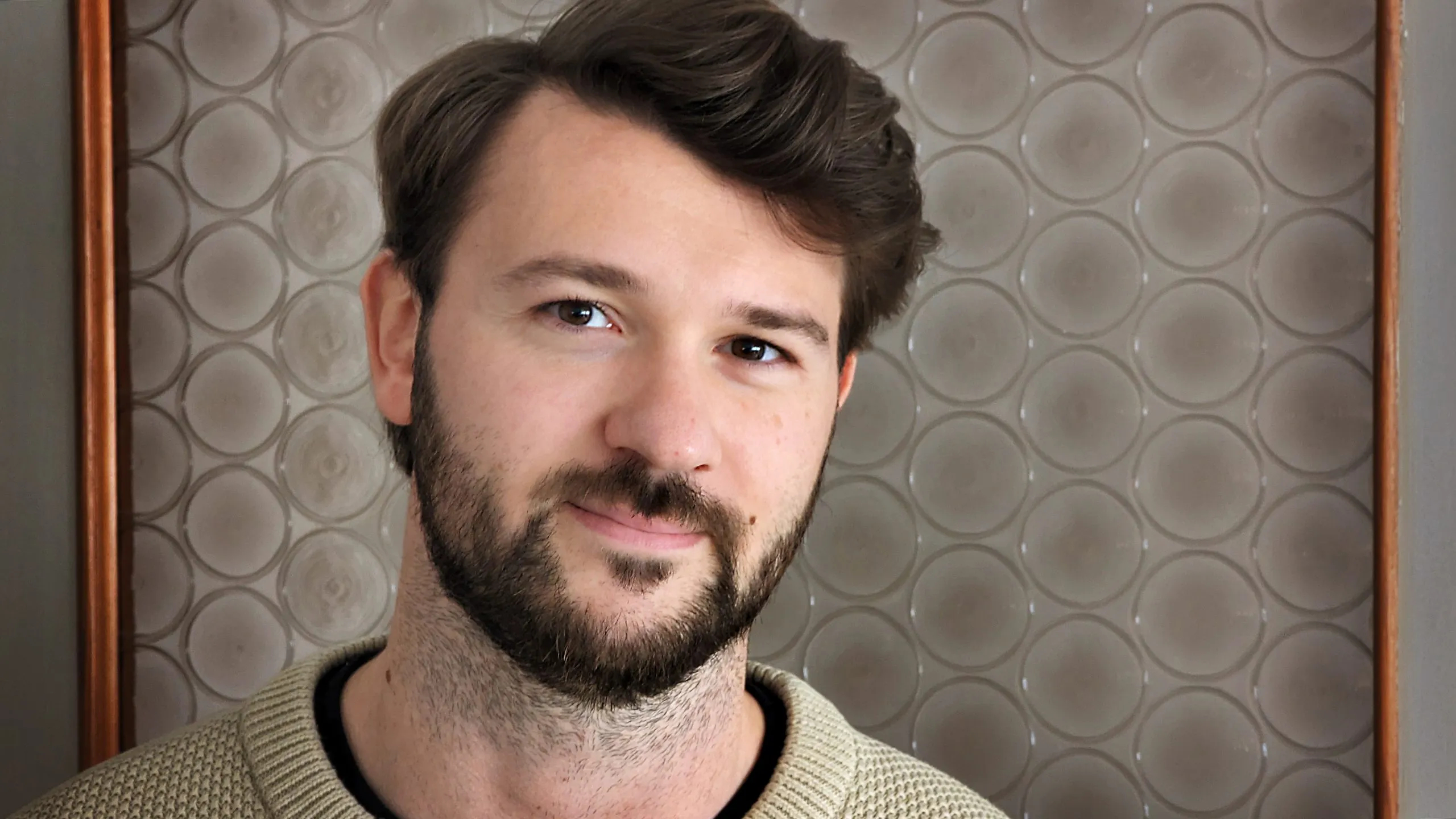
“All the guys I started following during the war… I joined when it was the bear market and no one was talking about coins… so then I started learning it a bit more, everything some more, and, like, yeah, just dug much deeper in the topic. And yeah, I realized the only thing that’s worth it is Bitcoin,” he tells IT Logs.
At the same time, the Warsaw-based entrepreneur was experimenting with Ethereum. He learned Solidity, the programming language for Ethereum smart contracts, and made educational videos for a popular YouTube tech channel.
But as he continued building, he saw the limitations: “To build stuff on Ethereum, you need normal database management, you need these oracles… and then in the end, I thought, well, okay, if you need all of this stuff, then what’s the point of building with Ethereum? Might as well just build with Bitcoin.”
This line of thinking eventually led him to produce a documentary on Bitcoin – which happened to become one of the most watched Bitcoin documentaries to date. “And this got me into the community. And then, you know, here and there, someone invites me to a conference to speak, so you meet other speakers, and it just grows from there,” he adds.
One project led to another until he founded his company: Flash. They launched in January last year and raised a million dollars by October. But unlike traditional payment processors that hold user funds, Flash offers direct peer-to-peer transactions while remaining non-custodial.
“Flash is like Stripe or Square… but what we do is direct peer-to-peer transactions. We never hold the key of the user, but we can still trigger payments. So it’s non custodial, P2P transactions, but we still take the transaction fees.” Pierre explains.
Flash offers automated payments without ever holding users’ keys – enabling subscriptions, automatic monthly or weekly payments, and backend transactions directly between users. This is something no one else on the market offers.
“We offer subscriptions… automatic, you know, monthly payments, weekly payments… we’re the only ones to offer this on the market.” he says.
However, adoption is slow, and this is where Flash encounters most of its challenges.
“No companies actually use it, because it’s not the kind of payment interactions people are used to. People are used to scanning the QR code. This makes the payment.”
For Pierre, this has been both frustrating and motivating. He sees companies with large Bitcoiner customer bases still relying on fiat payment rails:
“So many companies have customers that are Bitcoiners… they have subscription models, but they make their customers pay in fiat instead of in Bitcoin. Yeah, I don’t understand.”
Despite these challenges, he’s confident. “The market for Bitcoin payments is huge. If we even had, like, 1% of the markets, we’d raise money already… we’re talking like billions of dollars.”
The solution is global, non-custodial, and doesn’t require KYC. Most of its users are currently in the US and Nigeria, with the US converting more customers. Initially, they tried registering the company in the UK, but faced endless banking and paperwork issues – which forced them to incorporate in the US instead.
Hanging out with Jack Dorsey
Pierre has also met big names in the Bitcoin space. He met Twitter’s founder and Bitcoin aficionado Jack Dorsey twice – first during a pitch contest in Madeira.
“So, we went on a hike and that’s the first time I met Jack Dorsey. You know, shake hands, say what you do… It was awkward, but nevertheless, very interesting.”

Later, they crossed paths again at a Bitcoin conference gala in Kenya.
“As a person, he’s approachable. Definitely a mysterious but deeply influential figure, and he does have Cash App – 15 million users with Bitcoin Lightning wallets on the backend… very cool.”
Pierre also counts fellow Bitcoiner Jeff Booth as a mentor. “I have a very good personal relationship with Jeff Booth, almost like a mentor kind of thing.”
After the success of his first documentary, Pierre found himself in circles few filmmakers enter – meeting billionaires, ex-military investors, and some of Bitcoin’s most influential builders.
One of his key investors is an Australian billionaire with an unusual approach to Bitcoin exposure.
“He says, why would I personally buy Bitcoin if I can save the same money, buy the most exclusive new model of a Bugatti, keep it for two years, and it’s gonna double in price? There’s easier ways to make money. So instead, I just invest in companies like you, and that’s my Bitcoin exposition,” Pierre recalls.
For this investor, backing startups is a smarter strategy than holding coins directly. And with two exits worth over $200 million just this year alone, Pierre says, his logic seems to work.
Another turning point came from an ex-military American working in investment who reached out after watching Pierre’s film: “He’s a super networker, knows so many people. He organized a villa in Miami during a conference where we were ten people, everyone doing something big in the space. That’s when I met all these guys.”
These connections emerged while Pierre was working on his second documentary. Unlike his first film, which was purely research-based, this project involved interviews and partial external funding. Though it remains unfinished, the process expanded his network dramatically.
Celebrating Bitcoin’s halving with lasers on a Soviet skyscraper
Reflecting on the crypto space overall, Pierre remains a Bitcoin maximalist but appreciates how crypto communities push technology forward.
“Some of the technical things that Flash uses… it’s inspired by what crypto people do. They’re very good at creating strong communities and bringing developers. Some of the best developers in the world. They build crazy open-source technologies, post them on Reddit, and move on to the next thing.”
However, he remains critical of the scams and fleeting projects that dominate parts of crypto:
“People lose a ton of money, and that’s not what it’s about… in our case, we never touch a user’s money.”
Pierre also observes growing regulation globally, particularly in places like Nigeria, where strict requirements have made advertising nearly impossible for startups like his.
“Even a non-custodial company like ours needs to register with their SEC and keep $300,000 in a Nigerian bank, plus insurance. That’s just to be able to advertise there.”
Dubai, on the other hand, is emerging as a hub, albeit with its own regulatory complexities. One of Flash’s investors, who runs an on-and-off ramp company in the US, has opened an office in Dubai to capture this market.
“They raised money in Bitcoin to then invest in Bitcoin companies… the investment we got from them was all in Bitcoin, which is pretty cool.”
Despite opportunities in the UAE, Pierre prefers to focus on the US and Europe, where his network is stronger. He notes that Bitcoin as a payment method remains constrained in Dubai.
“Legally, the only thing that can be called currency is the dinar from the UAE government. Anything else can’t be called a currency. So it limits Bitcoin’s adoption for payments.”
Back home in Warsaw, Pierre is rooted in the city’s small but passionate Bitcoin scene. He co-founded the Bitcoin Film Festival, and each year, the festival draws more international guests than locals, highlighting Poland’s unique position in the global Bitcoin landscape.

But the most memorable event was last year’s Bitcoin halving party, which Pierre describes like a scene from a cyberpunk New Year’s Eve. It was hosted in the Palace of Culture and Science – Warsaw’s imposing Soviet-era skyscraper.
“We had the biggest halving party in the world here… 400 people came for the film festival. At 2am when the halving happened, we were all there getting drunk, looking at the block clock changing to block 840,000. Everyone hugging, happy halving. It was just very, very unique.”
To mark the moment, they projected a massive rotating Bitcoin logo onto the Palace’s façade using lasers – without authorization. “Cops drove by. Nothing happened. So it was fine.”
The future of Bitcoin? For Pierre, this certainty has only grown over the years. What once felt like a risky bet is now, in his eyes, inevitable.
“Back then, people needed to know about it because there was a chance it wouldn’t succeed. Now there’s 100% certainty it will. Freaking countries are buying it… if you think Bitcoin isn’t gonna succeed, open your eyes.”