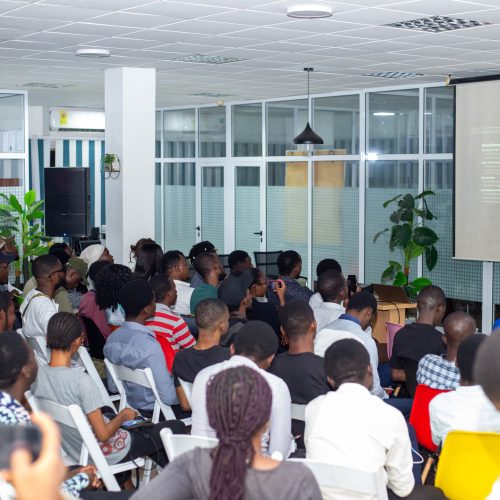

This is a guest post by Tania Ladanova, CEO at TRMNL4, a global connector for startups, investors, and tech leaders in consumer tech. With a network spanning over 8,000 startups in 112+ countries, Tania helps founders scale faster through partnerships with Meta, Snapchat, AWS, and more than 300 venture capital firms. At TRMNL4, she leads flagship programs such as Startup Academy (in partnership with Meta) and Traction Builder (in partnership with Snapchat), designed to help startup teams grow and fundraise efficiently. Over the past seven years, she has built global partnerships, including leading a fashion tech accelerator.

Last year, consumer startups received only 6% of global VC funding — the lowest share in history. But in 2025, something unexpected is happening: B2C startups are back. Not just back — they’re breaking records in growth, profitability, and user retention.
So, what changed?
Simply put, AI isn’t just a tech upgrade — it’s a shortcut to personalization that used to cost millions and take years to build.
Take Duolingo as an example. Previously, you had a general language course—now, thanks to AI, your learning experience is completely personalized. The platform generates endless unique content tailored just for you, improving retention. It’s no longer a standard app—it’s your own personal tutor.
Another example is Cal AI by 18-year-old Zach Yadegari. Calorie-counting apps have existed for years, but Cal AI’s success (generating $1.1M/month) comes from instantly recognizing and analyzing food images to precisely estimate calories—something traditional apps simply couldn’t do. It’s not just calorie-counting anymore—it’s effortless nutritional guidance tailored to your lifestyle.
It’s clear that AI is bringing new energy to consumer tech. At Startup Grind, Nicole Quinn from Lightspeed Ventures pointed out something interesting: AI could reduce our workdays from 12 to just 4 hours, freeing up time for leisure and, naturally, consumer spending. But early-stage B2C founders still lack the resources they need. That’s why we teamed up with Meta to launch Startup Academy 5.0 — helping the next generation of consumer startups grow.
Why B2C works better now: lower barriers, higher return
In past decades, launching a consumer product meant spending $100K+ just on marketing. And now:
- AI tools like Midjourney (for design), ChatGPT (for code and UX copy), Eleven Labs (for audio), Lovable (for coding) and many more allow founders to build MVPs in days — not months — for just a few thousand dollars.
- Fast and Cheap Launches: You can spin up a landing page, prototype with no-code, plug in an AI API, and start user testing the same week.
- Paid Ads Are Smarter: AI enables ultra-targeted advertising — showing your product only to those who are likely to engage. This cuts acquisition costs. In fact, companies using AI in marketing reduce CAC by up to 50%, while traditional B2C startups still face CACs of $700+ per user — often with low ROI.
For B2C startups, AI-powered personalization keeps users engaged longer and boosts repeat usage — shifting the focus from acquiring more users to getting more value from each one.
Consumer behavior is changing too: software as a core expense
Something deeper is shifting — how consumers think about spending.
People are increasingly willing to pay for tools that save them time, make decisions for them, or even talk with them.
- Users of VO — an AI-powered video app — often spend over $500 just in their first few weeks because they find it so useful and engaging.
- ChatGPT subscribers claim that $200/month is a bargain given the time and effort the tool saves.
As one A16Z podcast guest put it: “In the future, consumer spending will come down to just three things — food, rent, and software.”
Beyond tools: AI as a companion
These days, users want more than features — they want something that gets them.
Consumers don’t just want useful tools — they want something to talk to, something that understands them.
Companion apps are gaining ground. In one case from the A16Z podcast, a child spent two hours chatting with GPT about Thomas the Tank Engine — proof that people are ready to form emotional ties with software.
Even social media is being reimagined. In June 2024, gaming and mobile giant Voodoo acquired BeReal for €500M — not just to scale one app, but to build an entire ecosystem of AI-native social networks. BeReal already has 40M active users across the U.S., Japan, and France, and now Voodoo plans to launch more interest-based platforms that combine authenticity with AI — helping people connect more meaningfully around shared passions, not just curated content.
Furthermore, after meeting the Voodoo team in Paris, we saw how seriously they’re investing in AI-driven community design. They’re not just scaling one social app — they’re building the next era of online connection around real emotions and shared interests.
So, what’s the play?
We’re at the same point we were in the early 2010s with social media. Remember when Facebook, Twitter, and TikTok started? Nobody knew which platforms would stay popular. But everyone knew something huge was happening.
AI today feels like the App Store in 2008 — raw, crowded, but packed with opportunity if you move fast. We’re seeing two-person teams build tools that rival what took entire departments five years ago. You don’t need to have some super unique secret. The most important thing now is being fast. “Velocity is the moat”—moving quickly is how you’ll win.
Just look at those consumer tech brands. They’re successful because they were fast, smart, and took advantage of AI before everyone else caught on.