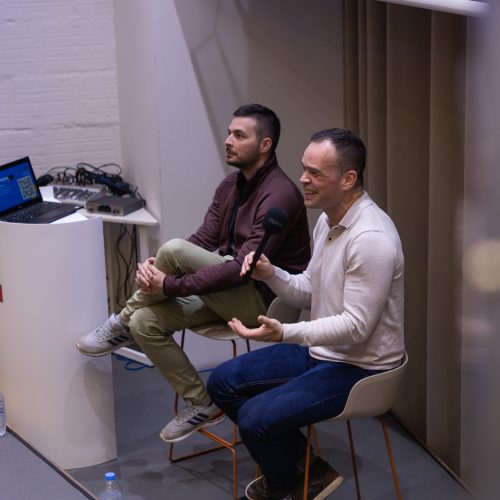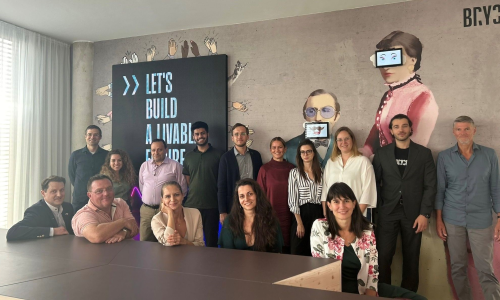
This is a guest post by Marko Lazic, an architect with 13 years of international experience who’s seen the building material manufacturing industry up close and personal. In this post, he explores how artificial intelligence is no longer just knocking on the door—it’s kicking it wide open, replacing old-school methods with smarter, data-driven solutions that are reinventing the way we design, produce, and build. Marko is a co-founder and CEO of Luccid, a startup that took part in The Founder Games, a SEE-based initiative and a reality show aimed at showcasing regional startups to international investors.
The building material industry is setting cash on fire by stubbornly sticking to outdated practices. These old-school methods are irritating, they are tanking margins and turning simple tasks into nightmares.
But there is light at the end of the tunnel. Some brave companies are adopting the 21st century with open arms!

Real-world success story
Let’s talk numbers: When BSH Home Appliances launched its AI system, the impact was immediate. In one pilot, they slashed material waste by up to 90%, transforming a major cost center into a model of efficiency.
With AI-powered inspection and real-time data, manufacturers can reduce waste, cut errors, and dramatically improve output. These are proven metrics from those who dared to experiment and upgrade. Faster decision-making directly translates into lower costs. Increased efficiency means happier customers.
In a competitive market, these measurable gains can make the difference between leading the pack and getting left behind, potentially lost.
As an architect with 13 years of international experience who’s seen it all up close and personal, I can tell you one thing: the building material manufacturing industry is stuck in the past! Manufacturers are playing it safe and sticking to outdated methods, but that “safety” is costing them dearly.
For years, I was that frustrated architect searching through static website catalogs and complicated technical documentation just to, MAYBE, find a tiny piece of information that I could use in my designs.
Over 2 years ago, I finally said F it, flipped the table (metaphorically), and quit practicing architecture. I’ve decided to do something and maybe merge my two passions: architecture and tech, just in time when AI was in its infancy.
After a lot of poking in the dark, product discovery, interviews, grants, accelerators, and presentations, we finally managed to stumble onto something.
We call it Luccid, an AI assistant built specifically for building material manufacturers and retailers. It sits on their website and helps every visitor quickly find the right product, file, or technical information, without needing to call or wait.
While it handles lead generation and technical questions automatically, companies get a clear view of what their customers are searching for, where they drop off, and which products draw attention. This means more sales, less strain on support teams, and a website that sells 24/7.
Paging manufacturers! It’s time to rip off the bandages, digitize, and power up with AI to finally catch up with the 21st century.
The call for change
Companies are sleeping on innovation. AI and digital tools aren’t distant luxuries—they’re the painkiller for an industry drowning in inefficiency.
Imagine an intelligent system that slices through mountains of data to pinpoint exactly the right material or product information in seconds, cutting out guesswork and trimming costly errors.
Once companies witness the power of instant, data-driven decisions, the need for digital transformation becomes obvious.
Let’s call it what it is: In our industry, people are still relying on paper-based processes. While companies think they’re dodging risk by avoiding change, they’re bleeding cash through inefficiencies and errors. Every printed catalog, static PDF, and outdated technical document is a hidden liability.
Clinging to old methods blinds them to the game-changing efficiency modern tech offers. In today’s fast-paced world, every wasted moment is revenue lost, and staying old-school is a direct path to being left behind.
The brutal truth is that old-school methods are a chaotic labyrinth. Imagine spending hours, even days, sifting through massive catalogs like Velux’s thousands of products or Knauf’s endless technical sheets, only to uncover a single scrap of useful information. This is a sure-fire recipe for lost revenue and missed opportunities.
These inefficiencies delay production, spike costs, and frustrate customers who expect speed. Sticking with traditional methods simply isn’t sustainable.
Disrupt the old, embrace the bold
Some trailblazers prove that change isn’t a leap into the unknown—it’s a clear path to success. Just look at BSH Home Appliances: they ditched clunky manual inspections and teamed up with a tech startup to launch an AI system that cuts through inefficiency like a hot knife through butter.
Their breakthrough shows that while outdated methods are draining resources, digital innovation delivers striking, measurable results—a blueprint for any manufacturer ready to break free from the status quo.
Imagine your entire operation running seamlessly on AI: real-time quality control, instant maintenance checks, and pinpoint-accurate material selection, without the friction of outdated methods.
In this new era, smart systems don’t just solve problems—they anticipate them before they even appear, adapting instantly to maximize efficiency and profits.
Reactive thinking belongs in the past. Companies that embrace proactive, AI-powered decision-making will dominate.
Traditional methods had a good run, but holding onto them today is asking for trouble. The digital revolution isn’t a “nice-to-have” anymore—ignore it, and competitors will happily eat your lunch. Throughout my career, I’ve learned that adopting smart, AI-driven systems doesn’t just streamline operations and cut costs; it’s essential to surviving and thriving long-term.
At Luccid, we’re pushing this change forward, proving that even the oldest, most stubborn industries can reinvent themselves—and become faster, smarter, and better prepared for the future.