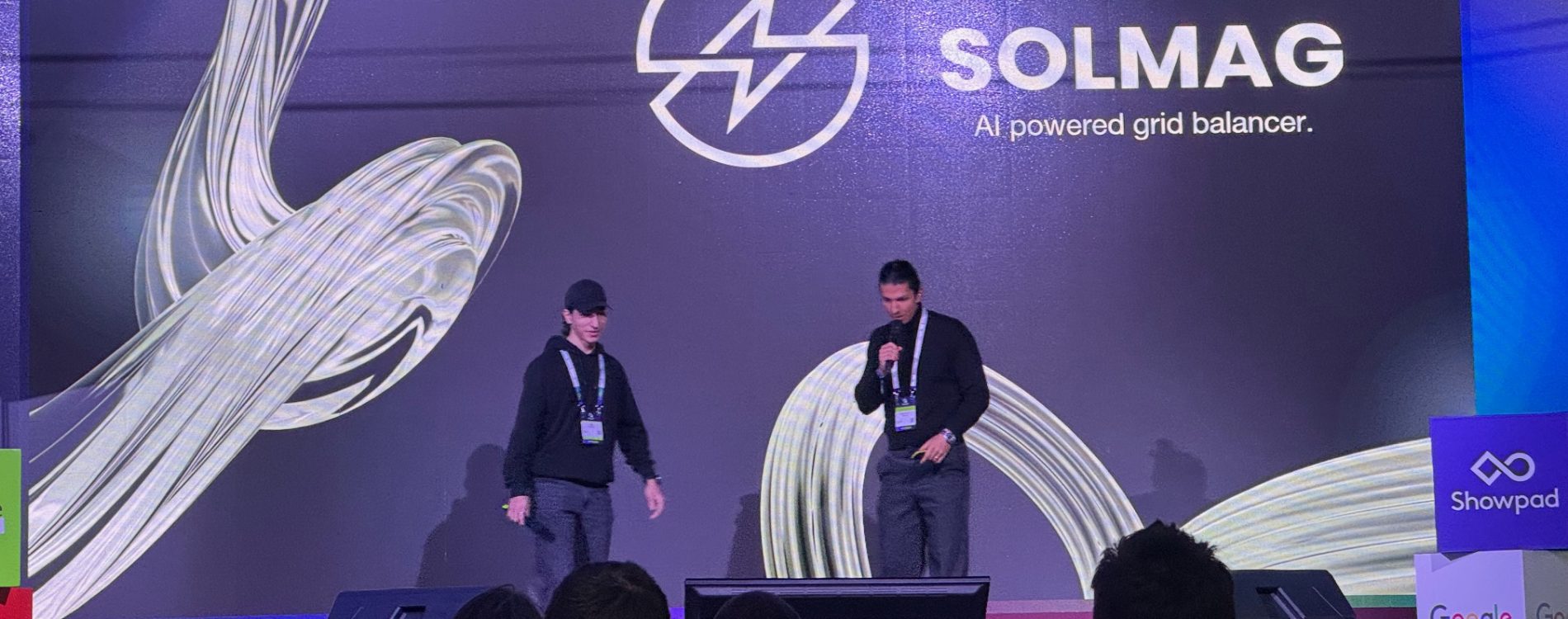

Romania’s energy transition is moving fast – sometimes too fast for the grid to handle. And that’s exactly the gap Solmag is trying to fill. The Bucharest-based startup is building what it calls a Virtual Power Plant (VPP): a decentralized network that connects prosumers (individuals that act both as producers and consumers), balances surplus production, and stabilizes the electricity grid during peak hours.
“We want to maximize the potential for solar panel owners to trade or sell their energy through our platform,” founder and CEO Alex Nicoară tells IT Logs. “We already have our first customer on board. Our goal now is to build the first 100 devices and close our angel round, for which we have commitments.”

A micro-factory producing one IoT device every 66 minutes
At the heart of Solmag’s VPP is a hardware gateway – a compact IoT device installed next to a prosumer’s inverter. It’s more than a sensor: the gateway can actively control energy injection into the grid or reroute surplus to other consumers in the network.
That device is built entirely in-house. “It took us two years to make the first product, three months for the second, six days for the third,” Nicoară explains. “Now we can assemble one device every 66 minutes – and we’re optimizing constantly.” he told Ziarul Financial.
What started as a tinkering effort is now a small “micro-factory” in Builders House, where Solmag’s team handles everything from component assembly to quality control. Demand is rising fast: the startup already has more than 300 device pre-orders and is modeling production needs between 1,000 and 15,000 units per month.
Following early traction, Solmag is now raising €500K to scale both manufacturing and its software stack. With roughly €200K already invested (including the founders’ hours), the new capital will focus on two fronts: expanding in-house production capacity and forming strategic partnerships with photovoltaic installers and energy-sector players.
“We want partners who bring more than cash. Installers, battery distributors, even real estate developers with hundreds of houses – anyone who can help us deploy the platform at scale.” Nicoară says.
Solmag already works with five PV installation partners, including Sun Power Energy (Iași), Hi-Tech (one of Huawei’s major distributors), Fast Electric, Interheat, and RCA Rețele Electrice – networks that together cover nearly 4,000 installations.
Romania’s prosumer boom is impressive, but it comes with a hidden cost: when thousands of households inject free solar energy during peak hours, the grid must rebalance – often at enormous expense.
“Balancing energy prices have hit €37,000 in extreme cases. Imagine your heater, normally costing 1 leu per kWh, suddenly costing 370 lei.” Nicoară explains. Solmag’s gateway helps manage that instability. When the grid is under stress, the device can delay injection or redirect surplus to other consumers in the network. Everything is automated.
Why prosumers care: transparency and faster payments
Romanian prosumers currently wait up to 24 months to be paid for the energy they feed back into the system, and often have no visibility into exact pricing. Solmag wants to shorten that to under 90 days.
The platform will also feature a digital wallet so users can track earnings almost in real time. Additionally, Solmag’s long-term plan goes well beyond Romania. The startup wants to scale its VPP network to more than 18 markets, using a franchise-style model expected to bring €20,000 per month per franchise.
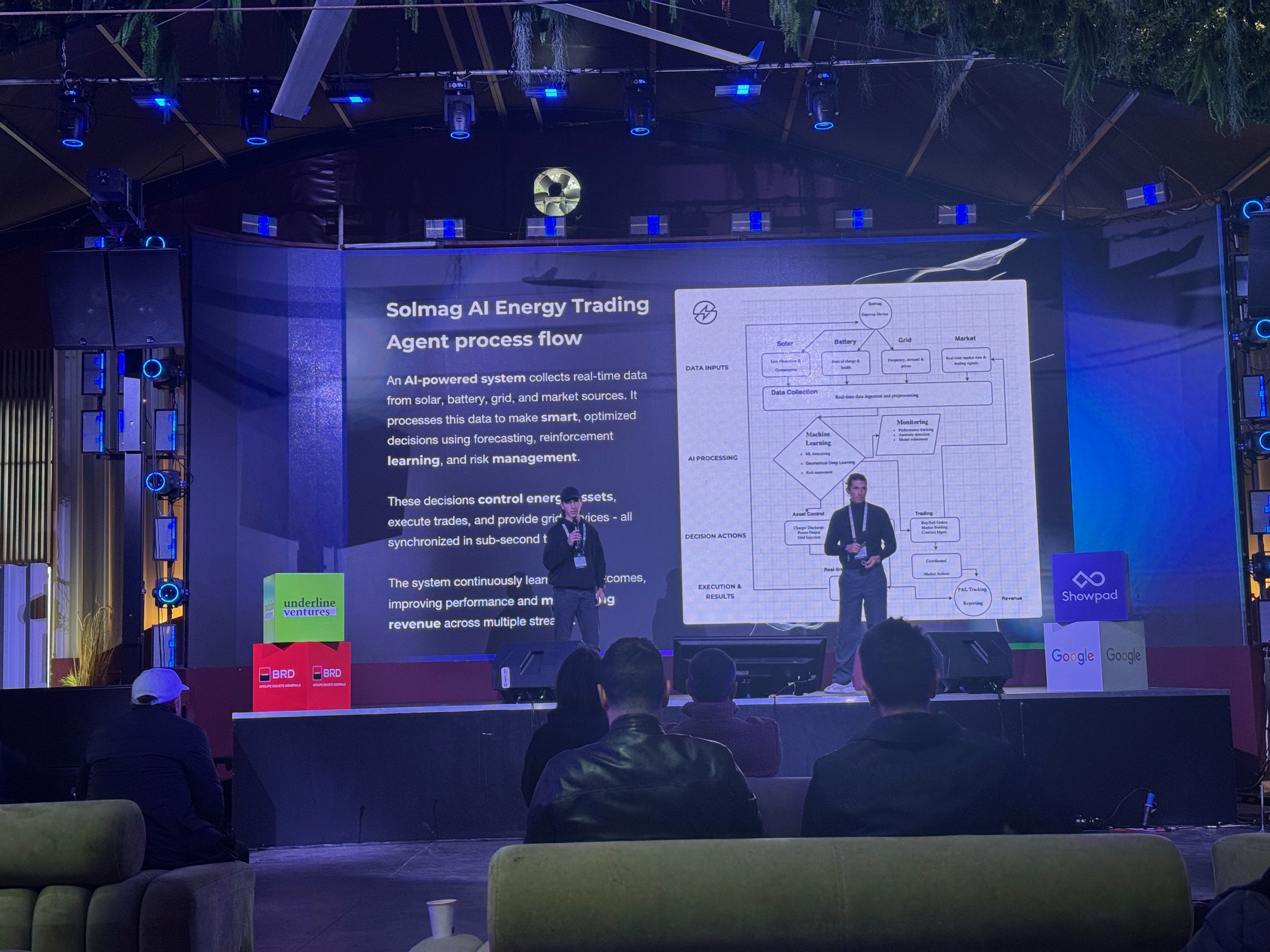
The company is rapidly expanding its energy ecosystem. It has already mapped around 100,000 prosumers worldwide, representing a combined capacity of 1.1 GWh. On top of that, it is developing an AI-driven system to monitor energy flows in real time, alongside a blockchain-powered engine to optimize energy routing. All of this feeds into a decentralized energy cloud, enabling peer-to-peer energy trading on a global scale.
Nicoară says the team aims for Solmag to become a decentralized energy provider by 2027, potentially in Europe, Asia, or Africa – wherever market fit emerges first. “P2P energy trading is often easier in underdeveloped markets. German players are active in Bangladesh; US companies have found traction in Vietnam.” he notes.
Globally, Solmag sees a First Mover Advantage: despite a growing interest in VPPs, Nicoară estimates there are only around 50 companies worldwide seriously targeting this market.
Nicoară’s leap into energy came from a mix of entrepreneurial experience and science-fiction-like curiosity. After scaling and selling a cleaning app, he began thinking far bigger – even selling his apartment to fund Solmag’s early development. Today, he channels that same ambition into building real-time data-gathering frameworks and leveraging Web3 technologies to create secure, transparent, and decentralized energy trading systems.
“I was looking for a greater meaning. Then I found the Kardashev Scale, which measures civilizations by how much energy they can harness from their star. That changed my perspective. Energy became the obvious field.” he says.
That big-picture thinking now runs through Solmag’s roadmap, from democratizing energy flows to decentralizing grid control. Solmag believes that within six months, its VPP will operate as a full-service energy provider for prosumers – including billing and invoicing.
The company’s north star: reaching 12 GW of traded energy, tapping into a global market expected to reach 100 million prosumers over the next decade. For Romania and potentially much of the world, Solmag is betting that the future of energy isn’t centralized, but distributed, intelligent, and built device by device, every 66 minutes.