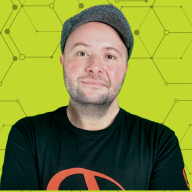
Donald Trump carrying a shotgun, Elon Musk throwing a Molotov cocktail, Mark Zuckerberg as a reptilian – these are just some of the surreal opening scenes in the viral videos created by The Dor Brothers. Behind the work is Yonatan Dor, who began as a musician trying to make videos for his own songs and gradually evolved into a pioneer in AI-generated content.
From filming with traditional cameras to experimenting with 3D, everything changed when generative AI tools emerged. By early 2022, six months before Midjourney even launched, Dor was already exploring AI visuals and became one of its first 200 users.
Offering AI videos on Fiverr, he quickly realized the demand was enormous. Projects grew bigger, prices rose, and The Dor Brothers soon became a wanted name in the industry. From satirical political clips to campaigns for brands like Boss and eToro, displayed in Times Square, their work follows trends – while also breaking them.
At the same time, the video production studio uses AI not as a gimmick but to tell stories that feel fearless, strange, and real – resulting in videos amassing over half a billion views, that are also a powerful tool for both creativity and cultural commentary.
Dor hates politics and the corporate world, which, paradoxically, allows him to draw the perfect satirical image of both. Now, his goal is simple: make great movies. We caught up with Yonatan during Freepik’s Upscale Conf in Malaga, and talked about his journey, his vision, and the future of AI in the creative industry.
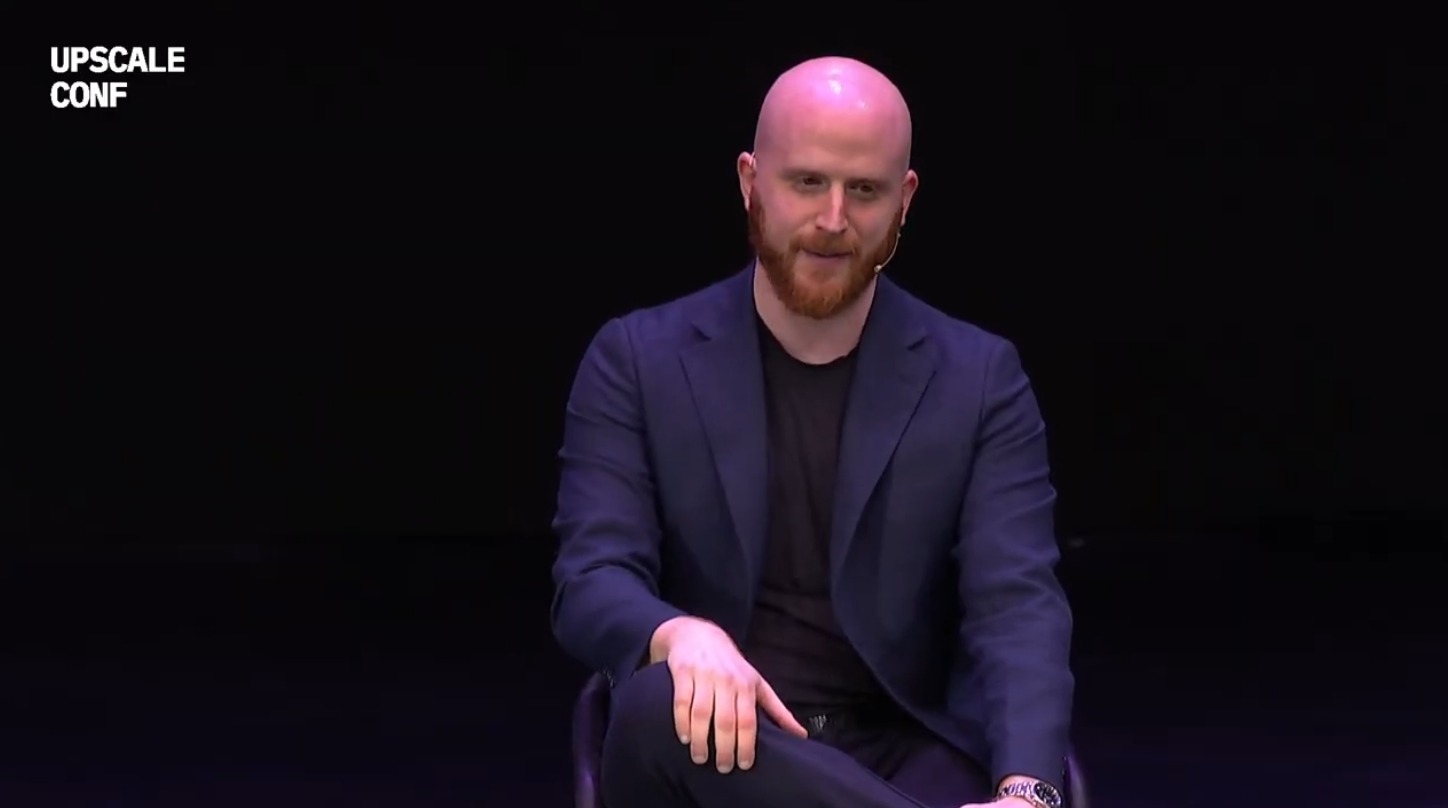
IT Logs: The Dor Brothers are clearly one of the most exciting brands in AI video production. How did your story begin?
Yonatan Dor: Long story short – I actually started out in music, specifically progressive metal. And if you know that scene, you know how much it values strong visuals. I wrote an album and wanted to create a full film for it one day. It felt like a distant goal, but I started working with people who made music videos for me. It wasn’t easy though – getting your vision across exactly how you imagine it is really hard. So I had that classic “if you want something done right, do it yourself” moment.
I started learning how to film, using a GH5 camera – just figuring things out as I went. For a couple of years, I made my own videos and even started creating music videos for others. Then I moved into 3D, thinking it would give me more creative freedom. It did, a bit – but rendering even a 30-second sequence could take six months, so it was still very limited.
Around February 2022, I started looking for new tools. Generative AI was just starting to emerge – people had been experimenting with it for years, but this was when it was finally becoming accessible. I was on YouTube searching for animation software when I came across a video titled something like “Make images from text” with a clickbait thumbnail. I clicked it, half-expecting it to be fake. But it wasn’t. The guy showed text-to-image generation, and it actually worked.
That moment completely blew my mind. Seeing for the first time that you could create images just from words – it was like witnessing the future open up in real time.
And the company itself, when did it actually start?
YD: We only really started calling ourselves The Dor Brothers once we were making traditional films. But the real turning point came with AI. Fun fact: I began offering AI videos on Fiverr, and I’m 99.9% sure I made the first AI music video ever offered as a service. I sold it for $200 to someone, and I thought, okay, that’s cool – someone actually likes this.
When I saw the visuals AI could create, I was blown away – they looked like something that would normally take a year to make. After that first order, more people started requesting videos. Demand was so high that I kept doubling the price, and it just snowballed. Suddenly, everyone wanted one.
And I don’t mean to sound pretentious, but by the time we had already made around 50 music videos, most people were just discovering this was even possible. In terms of understanding the potential of AI in video, we were easily six to eight months ahead of everyone else.
You’re working with brands like Boss, and you’re also making short films in a cinematic style. What are the main directions or goals you’re pursuing?
YD: There are a few key avenues. First, music videos. For example, take something like Lyrical Lemonade – my goal is to create a similar kind of cultural phenomenon, but in the AI world. The visuals we make are especially tailored for rappers. Once we fully tap into that space, I know it’ll reach a point where artists come to us constantly, and we’ll be producing videos for them on a regular basis. That’s one avenue we’re exploring.
The second is commercials. I’m naturally anti-corporate, and let’s be honest – most commercials today are the ultimate corporate exercise. But if you look back 20 years, commercials could be really cool. They had risky concepts, fun ideas, even a shareable quality. Today, I call most commercials “digital vomit.” They’re loud, chaotic, desperate for attention. People mute them, skip them, ignore them. Our goal is to bring back commercials that people actually want to watch – ads that are creative, engaging, and memorable.
Brands do approach us a lot for commercials, and we have a very strict philosophy: if you come to us, you come because you want something genuinely good. We know what works – we regularly get hundreds of millions of views – but you have to let us do our thing. It’s like going to a pizza place; you don’t tell the chef how to make the pizza, you just enjoy it. When brands try to control the process with boring storyboards or executive notes, everyone loses. But when they let us cook, the results are ads people love, and everyone wins.
Finally, feature films are our top priority. That’s the ultimate goal: to create real cinematic experiences, not just AI content. It’s where we see the future of the company heading.
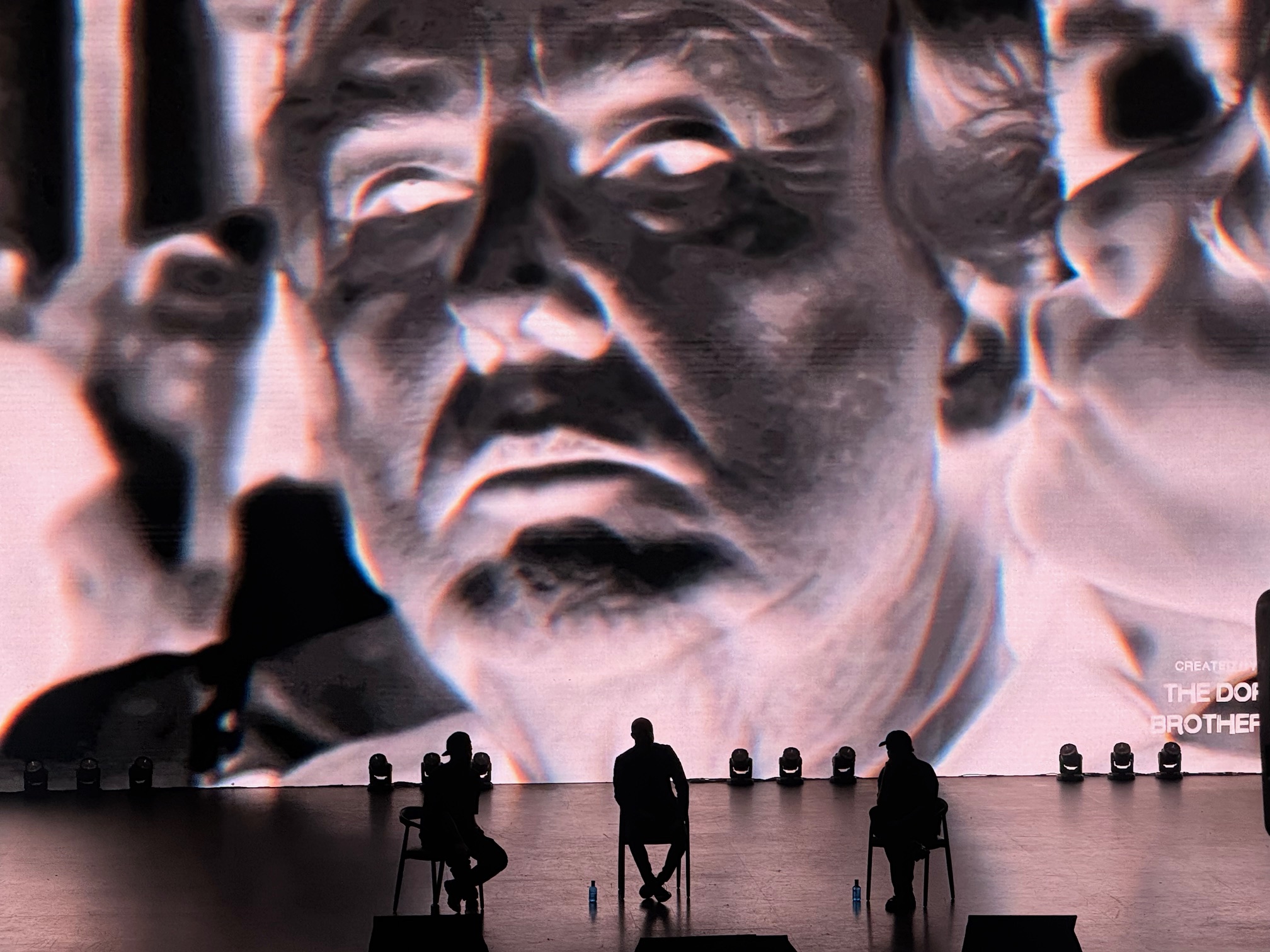
Many of your videos depict a dystopian kind of future. How far do you think we actually are from that kind of reality?
YD: It depends on how extreme you’re talking. On one end, you have something like “The Matrix”, with humans plugged directly into machines. On the other, there’s “Black Mirror” – and honestly, we’re already living in a lot of the “Black Mirror” scenarios. Look at subscription services, social media, and how we interact online. There’s something fundamentally off about it. People consume endless streams of thoughts on the internet, but in real life, they act differently. You and I can have a polite conversation, but online, those same people might say anything. The system is designed to poison us, in a way.
When it comes to filmmaking, AI is going to have a massive impact, but it’s hard to predict exactly how. All the complaints from Hollywood and studios? Most of that noise will fade. Eventually, those same people will use AI the way they use Photoshop or drive a car. The critics today will be the users tomorrow.
In production, AI will either replace or hybridize with CGI in almost every big scene. You don’t need hundreds of thousands of dollars to render a spaceship landing in a sci-fi film anymore – you can have a few skilled artists using AI to create something incredible, then polish it with VFX for perfect results.
I’d say this shift will take at least five to ten years. Actors will never be fully replaced, at least not convincingly. People may disagree, but I think the combination of AI and human creativity is where filmmaking is heading. The technology will enhance, not erase, what humans bring to the table.
You use a lot of satire in your videos. How do you view satire – do you see it as a tool to send a bigger message?
YD: For me, good satire isn’t about picking a side you dislike and saying, “These are the bad guys”, That’s not satire – that’s just gossip. True satire is like the king’s jester, the fool. Historically, the fool’s role was to remind the king that he’s not God, to prevent him from losing his senses and becoming a tyrant.
That’s how I see it. Satire highlights the human side of everyone we see in the news – politicians, celebrities, criminals. They eat, sleep, make mistakes, and are far from perfect, just like the rest of us. It’s about pointing out humanity, absurdity, and flaws, not just mocking one side.
What kind of reactions have you got about your videos?
YD: Surprisingly, about 99% have been positive. Out of 1,000 messages, we’ve probably only gotten ten hate mails. Most people say things like, “We love your videos.” I think there’s a real hunger for this kind of playful take on politics.
Politics has taken over our culture, and honestly, most people, including me, find it boring. You meet someone with a full life, experiences, skills, and thoughts, and suddenly the conversation is about Trump or some other headline that has nothing to do with you. I think people enjoy seeing the absurdity of it all, which is exactly what our videos aim to show.
AI-generated content has now surpassed human-generated content. How far do you think this will go?
YD: I actually subscribe to the “dead internet” theory. In a couple of years, we’re going to need to rethink what the internet even is. Right now, everything is bots and propaganda. Nobody goes to the second page of Google; the first page is already a curated, sponsored view that most people don’t even care about. The internet, as it exists now, is broken. What comes next is uncertain, and I hope it’s not just AI assistants that lie to you every day – that wouldn’t be any better.
This is a serious threat. It’s evolving into something like a 1984 scenario.

Do you think we’ll reach a point where we can’t tell reality from fiction?
YD: I always say the best way to combat that is to go outside and interact with real humans. Get your life energy from the sun and from people, instead of staring at screens designed to manipulate or exhaust you.
People keep talking about neutrality and unbiased AI, but the reality is that the world runs on power. Deep down, maybe it runs on love and good intentions, but in terms of control, it’s pure power – like “Game of Thrones”. No one is going to willingly give up that power. There’s no neutral “fun” play here; those in control are not going to just hand it over.
We’re talking about AI and regulation – Europe obviously has its own plans, the U.S. as well. How do you see regulation in this space?
YD: I think about AI a lot like nuclear weapons. The tech industry is essentially in an arms race – countries and companies are sprinting to outdo each other, and no one wants to slow down for fear of falling behind. That’s the fundamental problem.
The only way to survive this is a global regulatory body – an AI equivalent of the UN’s nuclear oversight. We have that for nuclear weapons, so why not for AI? Something to set standards, ensure safety, and prevent catastrophe before it’s too late.