
In 2017, the cryptocurrency boom swept the globe, promising a financial revolution and immense opportunities for those ready to dive into the world of digital assets. Yet, behind the dazzling promises of companies like Centra Tech is one of the most infamous frauds in the history of the crypto industry.
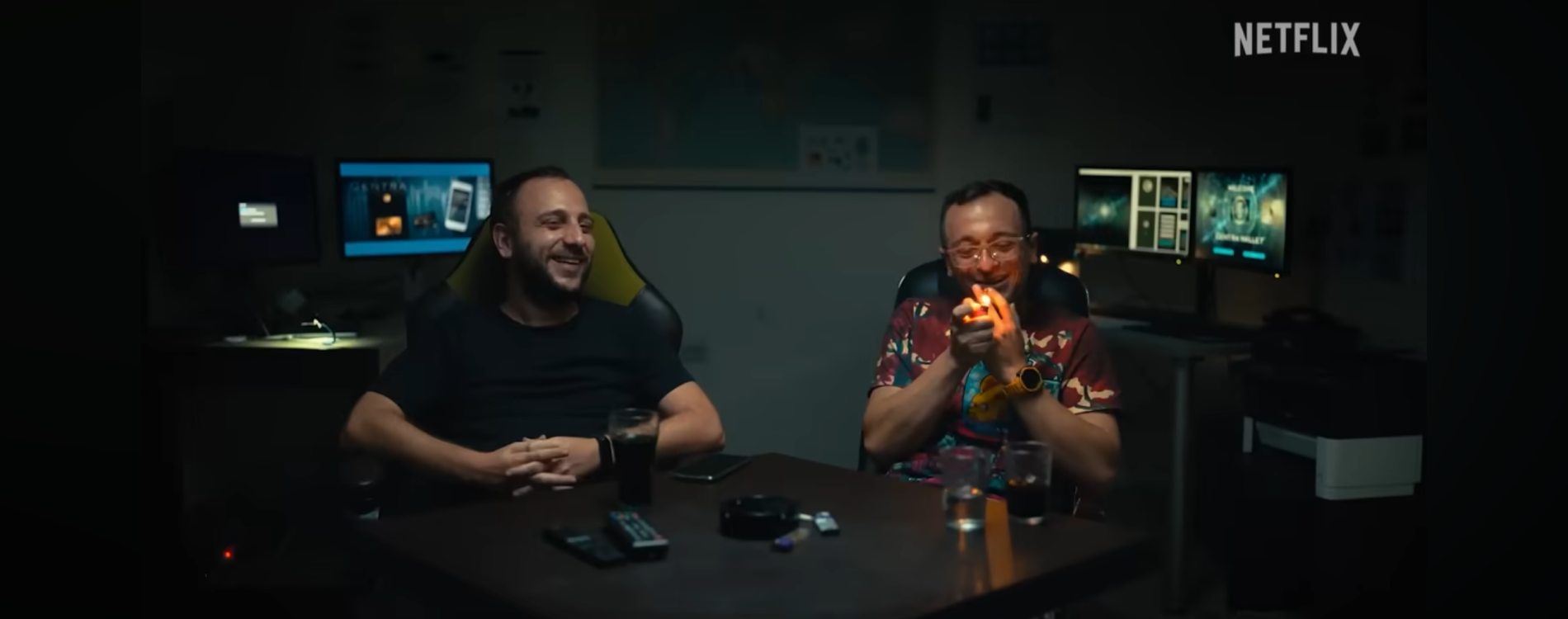
Netflix’s documentary, Bitconned, chronicles the story of three Miami-based co-founders—Ray Trapani, Sohrab “Sam” Sharma, and Robert Farkas. They raised millions from investors for a bogus crypto debit card, bolstered by fabricated partnerships with Visa and Mastercard and celebrity endorsements from boxing legend Floyd Mayweather and music producer DJ Khaled.
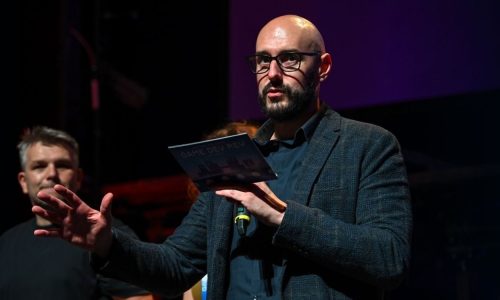
Caught in this web was a team of Macedonian programmers, led by Filip Burchevski and Martin Pejkov, who were building Centra’s projects from their office in the Skopje neighborhood of Drachevo.
From Upwork to Miami Exotics and Centra
Filip’s journey with Centra Tech began on the freelance platform Upwork in the summer of 2017, right at the peak of the crypto craze. His business partner, Martin, established the initial contact, connecting them with Sam Sharma, a Centra co-founder who headed the company’s technical operations.

“They offered to pay us in Bitcoin, which was valued at around $2,000 back then, but we turned it down. We wanted the security of having a steady salary,” Filip recounted in an interview with IT.mk. In a twist of irony, Bitcoin is now worth over $119,000.
Initially, their work centered on various projects, including the Miami Exotics luxury car rental platform mentioned in the documentary. Later, Filip, Martin, and several newly hired developers shifted their focus to Centra’s now-legendary crypto debit card. The concept appeared promising: a card that would allow users to spend their cryptocurrencies anywhere Visa and Mastercard were accepted.
“The idea was straightforward,” Filip explains. “A user holds a crypto balance, and we maintain a reserve of fiat currency. When they make a purchase, we deduct the equivalent amount from their crypto holdings and cover the transaction from our fiat reserves. From a technical standpoint, it wasn’t complex.”
However, red flags soon appeared. Centra’s website began boasting partnerships with Visa and Mastercard—claims that were later proven false. “Panic erupted when Visa and Mastercard demanded their logos be removed from our site. That was the moment we knew something was seriously wrong,” he adds.
As the Macedonian team worked on the technical implementation, suspicions about the company’s inner workings grew. “There were times we noticed oddities,” Filip says. “For instance, we later discovered that some of the executives listed on our website were completely fabricated.”
As Bitconned reveals, Centra had indeed invented fictitious executive profiles to build investor trust. The Macedonian team, however, remained oblivious to the full extent of the fraud until Netflix contacted them to film the documentary.
“We genuinely believed in the project,” Filip explains. “Sam Sharma came across as someone who knew his stuff. He was technically proficient and seemed passionate about Centra’s vision.” Filip still believes Sharma intended to build a legitimate product, in stark contrast to Ray Trapani, who was exposed as the scam’s true architect. “Sam might have been complicit in the false pretenses, but I think he wanted to create something real,” Filip recalls. “Ray, on the other hand, was purely focused on the money and orchestrating the fraud.”

The hunt for programmers in Skopje
As Centra’s ambitions grew, so did the need for more developers. Filip’s team, alongside a group of Russian developers, were recognized as the company’s top technical talent.
“Initially, it was just Martin and me for the first four or five months,” he explains. “But as they started rolling out new products, we needed to expand.” With a limited pool of senior developers in Macedonia, the team turned to Skopje’s private IT academies to recruit talent. “We sought out the most promising graduates,” Filip says. “We’d outline our needs, provide intensive training, and have them integrated into the project within a week. It was a demanding process, but it was effective.”
The team expanded to a dozen people, but this growth brought new challenges. Invoices started to accumulate, and the final two, amounting to roughly $100,000, were never settled. The collaboration came to an abrupt end on the same day the co-founders were arrested, which coincided with the major crypto market crash of 2018.
“They owed us for two invoices,” he shares. “We had already paid the Russian team out of our own funds, as their payments were routed through us, and we were waiting to be reimbursed for about $100,000. Sam assured us the payment was coming, but he was arrested the very next day. We ended up with almost no profit. It was incredibly frustrating, especially since we believed in the project and had plans for its future.”
Some of it was real, some of it false
The Centra application supported eight different cryptocurrencies, but for demonstrations, transactions were processed manually. “When a user swiped the card, someone on our end would manually log the transaction to update the balance in the system. It was meant to be a temporary measure,” Filip recalls. The plan was to fully automate the process, but the project imploded before this could be implemented.
In 2022, a Netflix crew arrived in Skopje to film their interviews for the documentary. “It was scorching hot, and we were sweating through the entire shoot. They probably thought we were nervous or lying,” Filip jokes. He explains they agreed to participate primarily to defend Sam Sharma, who they felt was unfairly portrayed and who ultimately received the stiffest sentence: eight years in prison. In contrast, Ray Trapani avoided jail time by cooperating with US authorities, while the third co-founder, Robert Farkas, was sentenced to just one year.
“Ray was a different story,” Filip shares. “My only interaction with him was on a Skype call where he was incredibly rude to one of the Russian developers. I told him to back off, that the man was working hard. That was the only time we ever spoke.”
Reflecting on the entire saga, he describes the experience with Centra as an “unforgettable life lesson.”
“We dove headfirst into the crypto space, researching 24/7, completely captivated by its underlying philosophy. But we eventually realized it all boils down to speculation,” he says. In his view, 90% of crypto projects lack real-world value and are propped up by little more than marketing hype and empty promises. “We were true enthusiasts at the start, but after Centra, I lost all interest. We saw that most projects were just get-rich-quick schemes.”
The scandal was also a harsh blow to the young developers on his team. “They were thrilled to be part of the project, but they ended up deeply disappointed. Some had only been with us for a month, but they had already bought into Centra’s vision,” he says.
Despite the unpaid invoices and the project’s spectacular collapse, the team never feared legal repercussions. “We were surprised when we heard about the arrests, but we weren’t scared,” Filip concludes. “Our work was legitimate, and everything was properly invoiced. Our fees were based on the actual work we delivered. But honestly, looking back, if we had asked for ten times the amount, they probably would have paid it. At that point, they were swimming in cash.”