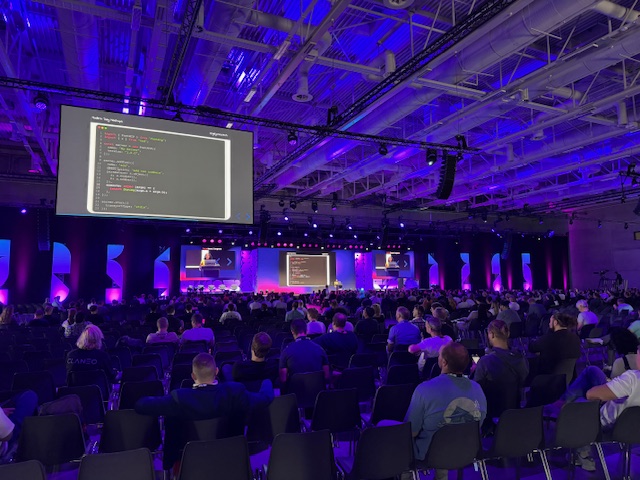
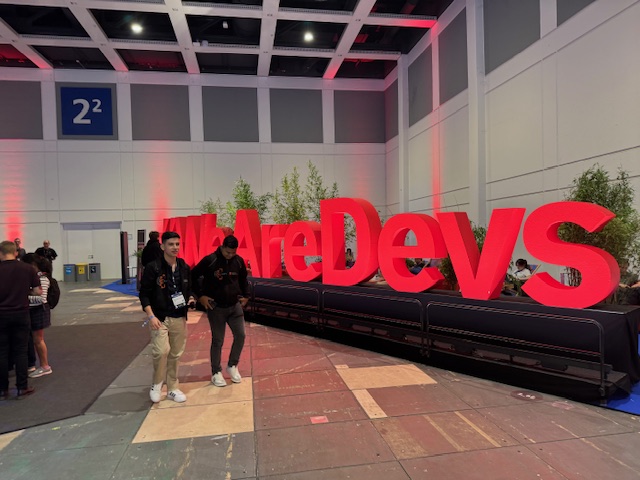
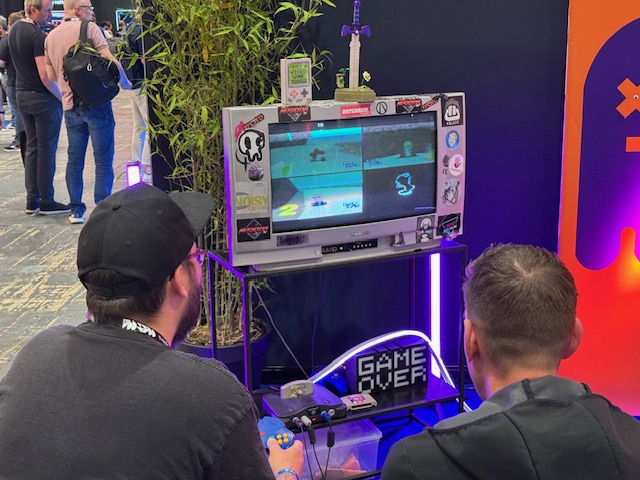
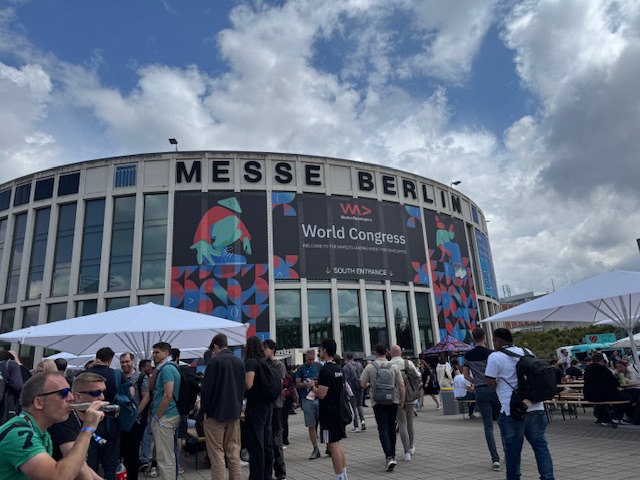
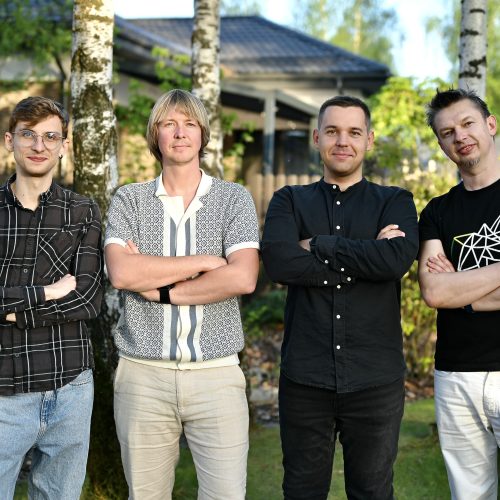
In the first half of July, Berlin was the undisputed capital of code as the WeAreDevelopers World Congress 2025 brought together nearly 15,000 developers from across Europe and beyond, at what many consider it as the continent’s largest developer event.
Over three days, on a main stage and eleven additional ones, speakers from tech giants like NVIDIA, GitHub, Amazon, Atlassian, and OpenAI shared insights, alongside gaming legends like John Romero, the man behind Doom and Quake, with regional stars such as Ivan Burazin from Croatia also taking the stage.
What’s even more remarkable is that the organizing team behind this massive conference hails from the Balkans, specifically Bosnia and Herzegovina — led by founder and CEO Sead Ahmetovic and COO Naida Vikalo.
Under the lead of the Bosnian duo, WeAreDevelopers has grown bigger and more influential than ever. Born in the small town of Odžak in northern Bosnia and Herzegovina, Ahmetovic later moved to Vienna, where he began his career as a developer at a local startup. He has held various IT roles at both domestic and international companies, and although based in Vienna, he spends as much time as possible in his homeland, aiming to share his experience and support the local developer community.
In an interview with IT Logs, Ahmetovic and Vikalo talked the explosive growth of WeAreDevelopers, the impact of AI on the tech industry, the unique challenges and opportunities for developers in Eastern and Southeastern Europe, and their vision for expanding the developer community both locally and globally.
IT Logs: Sead, the first time we met was in 2022 — three years later, what has changed for you personally, and for WeAreDevelopers as a conference?
Sead Ahmetovic: I think what has changed is that from 2022 until now, everything is AI — literally all the topics. In 2022, AI was just beginning to emerge, but now it has become a mass topic. At the WeAreDevelopers World Congress, I think more than 90% of the sessions — and we have 500 speakers — cover some aspect of AI.
Are there any other trends you’re seeing starting to develop?
SA: With the rise of AI, a lot is changing behind the scenes. It’s not just about how you develop software or products, or how you do DevOps — it’s changing the whole industry. This includes marketing, sales, and many other areas. Everyone in tech or business feels this shift; you simply can’t miss it.
Most sessions were focused on AI agents – is this trend the next big thing, or have they always been around?
SA: I think it’s just the beginning. Many businesses and organizations are now developing AI agents for various purposes. The interesting part will be when these agents work together, and when there are technical advancements that companies can implement.
This will definitely change how products and software work, and how companies operate. Generative AI was only the start. AI agents are a very hot topic now, but it won’t be the end — we are still only scratching the surface of what AI means for the world.
Going back to WeAreDevelopers, can you share some numbers on attendance, startups, and whether the conference also helps startups?
SA: Sure. Like with every iPhone launch — it’s always the best iPhone because it’s the latest — for We Are Developers, this year we had around 15,000 developer participants, 500 speakers, and 20 stages. We’re very proud of that. With many great partners, we also announced yesterday that next year we will host WeAreDevelopers World Congress in North America as well.
So, in 2026, there will be the Berlin event in July, North America in September, and soon we’ll announce an event in India too. Despite AI being a hot technology, we see high demand for people to connect in person, collaborate, and bring different perspectives together to build great things.
What is the motivation behind this expansion? Are you seeing bigger needs in India compared to the rest of the world?
SA: First, the decision to do WeAreDevelopers in North America has been considered for a long time. Without the pandemic, we might have done it earlier. Many partners requested us to bring WeAreDevelopers to North America because they miss the energy and hardcore content of a festival-like event there.
It was an easy decision because there is clear demand. It’s similar with India — we want to test the market. We have great partners there. For example, Chr. Hansen, a multibillion-dollar company, supports us with his local team to grow the brand. So, there will be a lot of work and fun ahead.
Turning to the IT industry itself — in Eastern and Southeastern Europe, there was a decrease in developer demand last year. What do you think caused this?
SA:I don’t think AI is the reason — I want to be clear about that. Many people fear AI will take jobs, but actually, there will be much more demand for developers. The definition of a developer is changing, but that’s always been the case. Ten years ago, if I hadn’t learned new skills, I wouldn’t have had a job. It’s not much different now — what’s changed is how products are built.
The challenge is more about orchestrating, analyzing, articulating problems, and understanding business needs. The real reason for the downturn in Europe over the last year and a half or two years is an economic crisis. It’s not just Eastern Europe — Germany is hit hard in many industries like automotive, and all their suppliers suffer. This is a big ecosystem with cycles of ups and downs. After every down comes an up.
Since you have roots in the Balkans, what have you seen regarding the talent pool there in recent years?
SA: The Balkans have great technical talent — not just recently, but always. There is a very strong foundation in STEM education, technology, and electronics. Decades ago, people from the Balkans were traveling worldwide to build reactors and such.
We also have strong role models — Nikola Tesla is a great example. Recently, more young people from the Balkans are going global, working in international companies, moving abroad, or working remotely. I’m not concerned about the talent pool from the Balkans; I think we’re among the best in the world.
What do you see as missing? Is it storytelling and marketing?
SA: Yes, and that’s natural. People with strong technical skills are often not the best at marketing, sales, or personal branding. This can be true for societies or countries too. We need to improve communication and storytelling.
That’s why what you do is so helpful — it helps bring the Balkans more into the international spotlight. Often, people here hide their work if it’s not perfect — like if you’re not an astronaut going to Mars. But honestly, others are not that much better in any aspect.
Naida, first, congratulations on your new position. What are your personal expectations and plans for your developers? Do you plan to have bigger engagement in the Balkans?
Naida Vikalo: Thank you for the opportunity. Our main expectation is to empower the tech community to grow personally and professionally — not just professionally. This is even more important in the AI era because collaboration is key. Instead of building only individual skills, people need to work together on solutions.
We want to continue community work Europe-wide, bringing together East and West perspectives. Regarding the Balkans, we’re always happy to see engagement and willingness to collaborate and of course, we want to do more and are open to new partnerships.
This website uses cookies to improve your experience while you navigate through the website. Out of these, the cookies that are categorized as necessary are stored on your browser as they are essential for the working of basic functionalities of the website. We also use third-party cookies that help us analyze and understand how you use this website. These cookies will be stored in your browser only with your consent. You also have the option to opt-out of these cookies. But opting out of some of these cookies may affect your browsing experience.
Necessary cookies are absolutely essential for the website to function properly. These cookies ensure basic functionalities and security features of the website, anonymously.
Cookie
Duration
Description
cookielawinfo-checkbox-advertisement
1 year
Set by the GDPR Cookie Consent plugin, this cookie records the user consent for the cookies in the "Advertisement" category.
cookielawinfo-checkbox-analytics
1 year
Set by the GDPR Cookie Consent plugin, this cookie records the user consent for the cookies in the "Analytics" category.
cookielawinfo-checkbox-functional
1 year
The GDPR Cookie Consent plugin sets the cookie to record the user consent for the cookies in the category "Functional".
cookielawinfo-checkbox-necessary
1 year
Set by the GDPR Cookie Consent plugin, this cookie records the user consent for the cookies in the "Necessary" category.
cookielawinfo-checkbox-others
1 year
Set by the GDPR Cookie Consent plugin, this cookie stores user consent for cookies in the category "Others".
cookielawinfo-checkbox-performance
1 year
Set by the GDPR Cookie Consent plugin, this cookie stores the user consent for cookies in the category "Performance".
CookieLawInfoConsent
1 year
CookieYes sets this cookie to record the default button state of the corresponding category and the status of CCPA. It works only in coordination with the primary cookie.
Functional cookies help to perform certain functionalities like sharing the content of the website on social media platforms, collect feedbacks, and other third-party features.
Cookie
Duration
Description
__cf_bm
30 minutes
Cloudflare set the cookie to support Cloudflare Bot Management.
mailchimp_landing_site
1 month
MailChimp sets the cookie to record which page the user first visited.
Performance cookies are used to understand and analyze the key performance indexes of the website which helps in delivering a better user experience for the visitors.
Analytical cookies are used to understand how visitors interact with the website. These cookies help provide information on metrics the number of visitors, bounce rate, traffic source, etc.
Cookie
Duration
Description
_fbp
3 months
Facebook sets this cookie to display advertisements when either on Facebook or on a digital platform powered by Facebook advertising after visiting the website.
_ga
1 year 1 month 4 days
Google Analytics sets this cookie to calculate visitor, session and campaign data and track site usage for the site's analytics report. The cookie stores information anonymously and assigns a randomly generated number to recognise unique visitors.
_ga_*
1 year 1 month 4 days
Google Analytics sets this cookie to store and count page views.
_gat_gtag_UA_*
1 minute
Google Analytics sets this cookie to store a unique user ID.
_gid
1 day
Google Analytics sets this cookie to store information on how visitors use a website while also creating an analytics report of the website's performance. Some of the collected data includes the number of visitors, their source, and the pages they visit anonymously.
CONSENT
2 years
YouTube sets this cookie via embedded YouTube videos and registers anonymous statistical data.
Advertisement cookies are used to provide visitors with relevant ads and marketing campaigns. These cookies track visitors across websites and collect information to provide customized ads.
Cookie
Duration
Description
test_cookie
15 minutes
doubleclick.net sets this cookie to determine if the user's browser supports cookies.
VISITOR_INFO1_LIVE
5 months 27 days
YouTube sets this cookie to measure bandwidth, determining whether the user gets the new or old player interface.
YSC
session
Youtube sets this cookie to track the views of embedded videos on Youtube pages.
yt-remote-connected-devices
never
YouTube sets this cookie to store the user's video preferences using embedded YouTube videos.
yt-remote-device-id
never
YouTube sets this cookie to store the user's video preferences using embedded YouTube videos.
yt.innertube::nextId
never
YouTube sets this cookie to register a unique ID to store data on what videos from YouTube the user has seen.
yt.innertube::requests
never
YouTube sets this cookie to register a unique ID to store data on what videos from YouTube the user has seen.