
When Croatia’s Blitz Distribution began preparing a new documentary series featuring footage from the Yugoslav era, they hit a familiar wall—much of the archival video was unusable by modern broadcast standards. Grainy resolution, fuzzy faces, and analog noise made the content feel ancient, not nostalgic. That’s where Croatian startup TensorPix came in.
Using their AI-powered video enhancer, the team was able to automatically upscale, denoise, and restore decades-old VHS footage into clean, crisp 4K visuals that looked like they were filmed yesterday. What once took entire post-production teams months to do was now possible in a matter of hours, without expensive hardware or technical expertise.
For instance, a single 90-minute film could cost hundreds of thousands of dollars to restore manually. TensorPix changes that equation with a suite of specialized AI models—based on GANs and generative algorithms—that can upscale resolution, interpolate missing frames, and clean up artifacts automatically
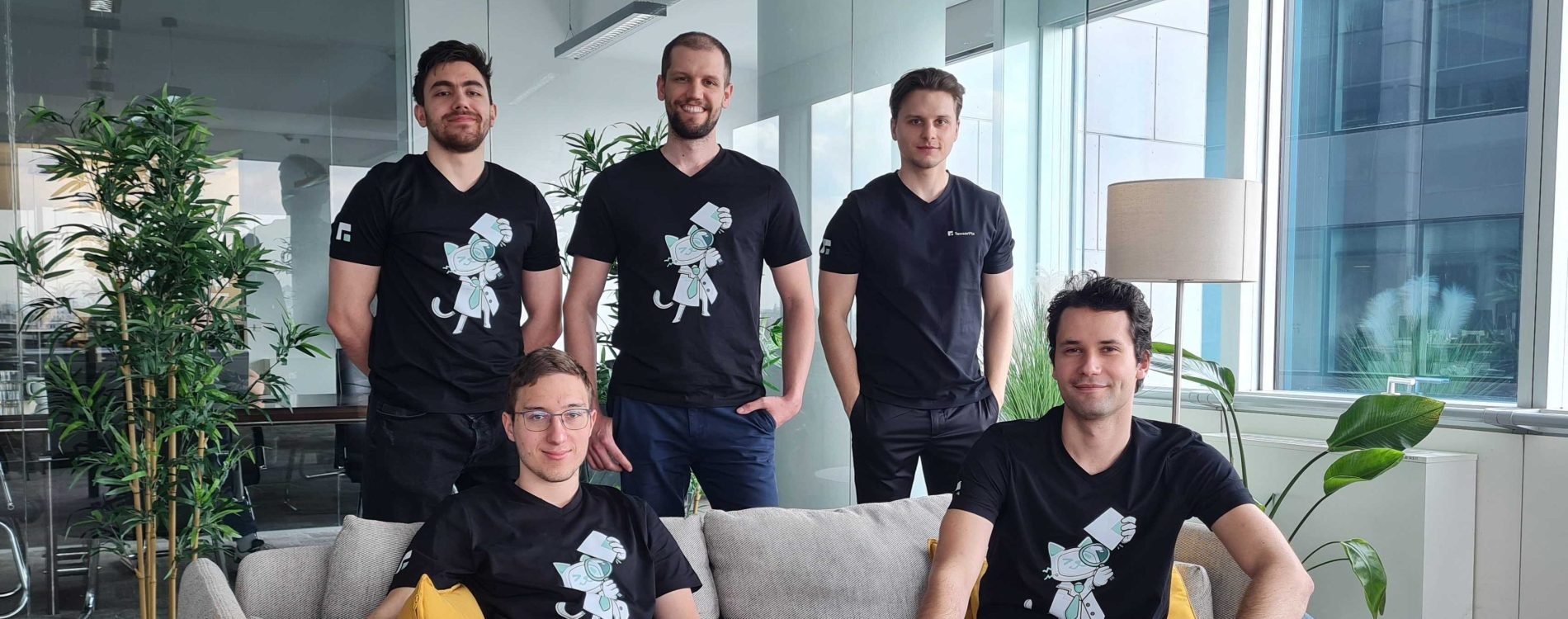
Founded in Zagreb during the pandemic, today TensorPix counts over 500K monthly users and clients like Blitz, with growing demand from creatives, archivists, and businesses worldwide.
In an interview with IT Logs, TensorPix CEO and co-founder Bartol Freskura explains how the idea emerged from the frustration with traditional, costly, and time-consuming restoration processes. He also reflects on the rise of Croatia’s startup ecosystem, which he describes as small but increasingly well-connected.
IT Logs: What inspired the founding of TensorPix, and what problem were you trying to solve initially?
Bartol Freskura: TensorPix was founded in 2020 and the main problem we wanted to tackle was the extremely expensive and time-consuming restoration process of archived video footage. Restoring and enhancing a single 90 minute movie can cost hundreds of thousands of dollars or even more, and it takes months to complete.
With that in mind, only A-grade TV studios can afford to restore lots of movies and videos. For the rest of the studios and televisions, this means they can restore a few works a year. The main idea behind TensorPix was to fix this problem by introducing AI into the restoration and enhancement process. The AI model intelligently analyzes video frames and fixes all the major issues completely automatically: low resolution, blurry details, noise, artifacts, etc. As the process was automated, our solution could be presented as a cost-efficient way of upgrading the whole video archive.
How does your AI enhancement technology work under the hood? Is it based on super-resolution, diffusion models, GANs, or something else?
BF: TensorPix is a collection of multiple AI models. Each AI model can tackle one quality problem. The AI Upscaling models were created to fix the issue of low resolution, converting the low res video file to a high resolution file with added details and clarity. Each AI model uses a slightly different AI technology. For upscaling, we use the GAN based super-resolution AI models.
For frame interpolation we use a generative model that interpolates new frames given two neighbouring frames. In summary, every model requires custom research and adaptation because each model solves a different quality issue.
Who are your primary users today—creatives, archivists, businesses and do you see your product being used in journalism or documentary filmmaking?
BF: When we released the product we thought it would mostly be used to restore old videos that are of lower quality: old family videos, documentaries, TV shows and movies… As the time went on, we started seeing more and more different use cases. People indeed use it to give old videos a new shine, but they also use it to enhance modern video to extreme quality levels. Most modern video is in Full HD (1080p) format but there is now a new standard: 4K – and people want it because it looks better on bigger screens.
So they come to us to upscale the content from 1080p to 4K. I think most of our users can be categorized as creatives -> influencers, digital agencies, solo artists, and AI artists as of recently. If you ask our B2B users, they will mostly use it for their archives. In most cases they are producing a movie and need to reuse archival content that is of lower quality. We come in to restore the older content and make it more watchable on modern displays.
Do you think AI-powered tools like yours are changing the way people think about personal nostalgia and media archiving?
BF: From what I’ve learned, people like the archiving process in theory because it’s a nice idea to have everything created stored someplace. However, in practice it’s a bit different because the proper archiving process isn’t so simple. It takes a lot of storage you have to pay for and manage, you must take care of backups, you have to make it easily searchable… all this just to have an archive that isn’t used much because end viewers prefer new content in many cases.
I think AI changes things for the better. First, AI can enhance the content quality which gives the old content a new viewing perspective – almost like watching a new movie. Second, latest LLMs can make whole archives searchable through use of natural language. And that’s not limited to text – you can search photos, audio, video, text, documents, all with simple natural language prompts. Combined, this makes archives more appealing to both end-users who will consume the archived content and direct archive users who need to search the archive in order to find relevant content.
Can you tell us a bit about the startup scene in Croatia and how it influenced TensorPix’s journey?
BF: Croatian startup scene is booming from what I’ve seen. Every year I see more and more startups, new VC funds and angels, new incubation programs and incubators, and new EU funds reserved for early stage companies. When we started in 2020, there were already a few incubators, one of which we were part of (BIRD). The incubators are constantly upgrading their programs making it more and more similar to the golden YC standard.
Croatia is a small country with a relatively small entrepreneurial scene when compared to other countries. Being part of the incubator means you can easily reach every relevant startup-related person in Croatia and the region. This is extremely valuable for new founders without an established network.
One day we would talk to a mentor who knows how to build a marketing funnel and proper UX, the next we would be discussing fundraising tips and tricks with a veteran founder. Being able to reach almost anyone from the startup scene in a short span of time is the beauty of a smaller startup scene like the Croatian one.
What’s the long-term vision for TensorPix? Do you see yourselves evolving into a full creative AI suite?
BF: Our next stop is B2B. Up until a few months ago, we were mainly focused on building the B2C part of the product. While doing that, we realized there are even bigger opportunities in the enterprise space. There are companies with huge volumes of video data which our tech can elevate to the next level.
We are now focused on finding these B2B clients and learning how our tech can help them utilize videos in ways they haven’t even imagined. Long term, we want to add more AI video features to the product making it the go-to AI tool for intelligent and automatic video processing.