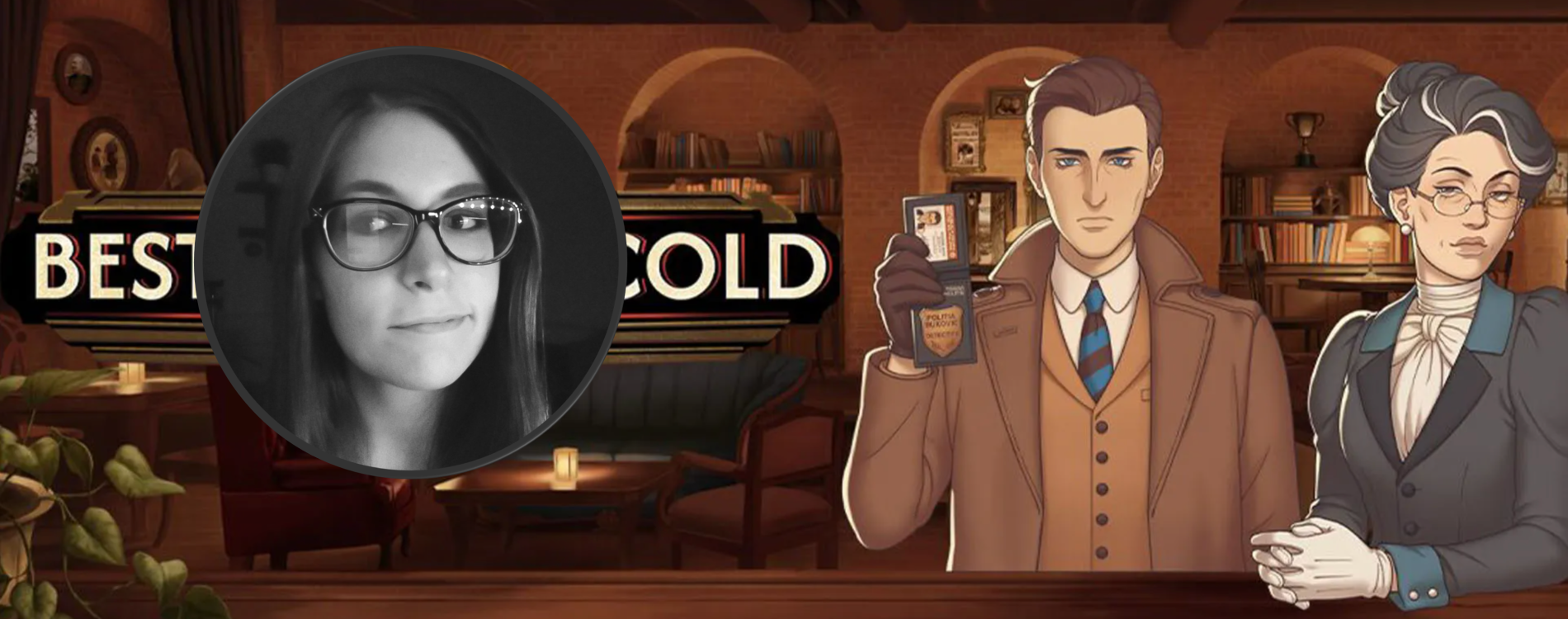

In the burgeoning world of indie games, innovation often comes from unexpected combinations. “Best Served Cold,” a new title from developer Rogueside, dives headfirst into this philosophy, stirring together a speakeasy bartending simulator with a captivating murder mystery set against the backdrop of an alternate history Europe. To get a taste of this intriguing concoction, we sat down with Antje Van den Heuvel, Art Director and Writer on the project.


The initial spark for “Best Served Cold” came from a desire to refresh a beloved genre. “The murder mystery genre is a popular one that we ourselves are big fans of, but to say it’s well-trodden ground at this point is a bit of an understatement,” Van den Heuvel began. The team sought a unique angle for their first narrative-driven game. “We wanted our first foray into narrative games to be a mystery, but we also wanted to bring something fresh to the table, and so we decided to focus less on the forensics and more on the social element.”
This social focus naturally led them behind the bar. “Games like Coffee Talk and VA-11 Hall-A have already shown us just how powerful the role of a bartender can be,” she explained. “Meeting and befriending a wide range of characters, learning hot gossip and intimate secrets by providing them a listening ear and a steady flow of well mixed drinks… It’s all par for the course for a skilled mixologist.” The next step felt intuitive. “Applying those skills to solving crimes felt like the logical next step, and something we hadn’t seen before.”

The choice of a speakeasy setting further cemented this vision. “Placing the story in a speakeasy felt like a logical choice as well,” Van den Heuvel noted. “As your establishment gradually becomes the last one standing amidst government crackdowns, characters from all walks of life will end up at your doorstep seeking an escape from their troubles, including troubles they’ve inflicted onto others.” While the Roaring Twenties provided inspiration, the team was keen to carve their own path. “The 1920s are an inspiring period of history, but most media revolving it places a heavy focus on America in particular. We decided early on to follow the example set by games like Disco Elysium and come up with our own world, placing the story in Europe and bending its history to our will in order to serve the story we wanted to tell.”

Delving deeper into this “alternate history Europe,” Van den Heuvel elaborated on the game’s unique setting. “The city of Bukovie, where the game takes place, is loosely inspired by 1920’s Bucharest, drawing heavily on the writing team’s personal experiences having lived and worked there as well as on our research into the time period and the realities of running a speakeasy.” However, historical fidelity wasn’t the primary goal. “That being said, an exact recreation of any one location or slice of history was never our goal.” Instead, she described their world-building process: “The world we created consists of many different puzzle pieces, combined to make the best possible backdrop for the story we wanted to tell. A story that, at its core, is about bringing people from different worlds together against all odds and protecting the community you have built.”
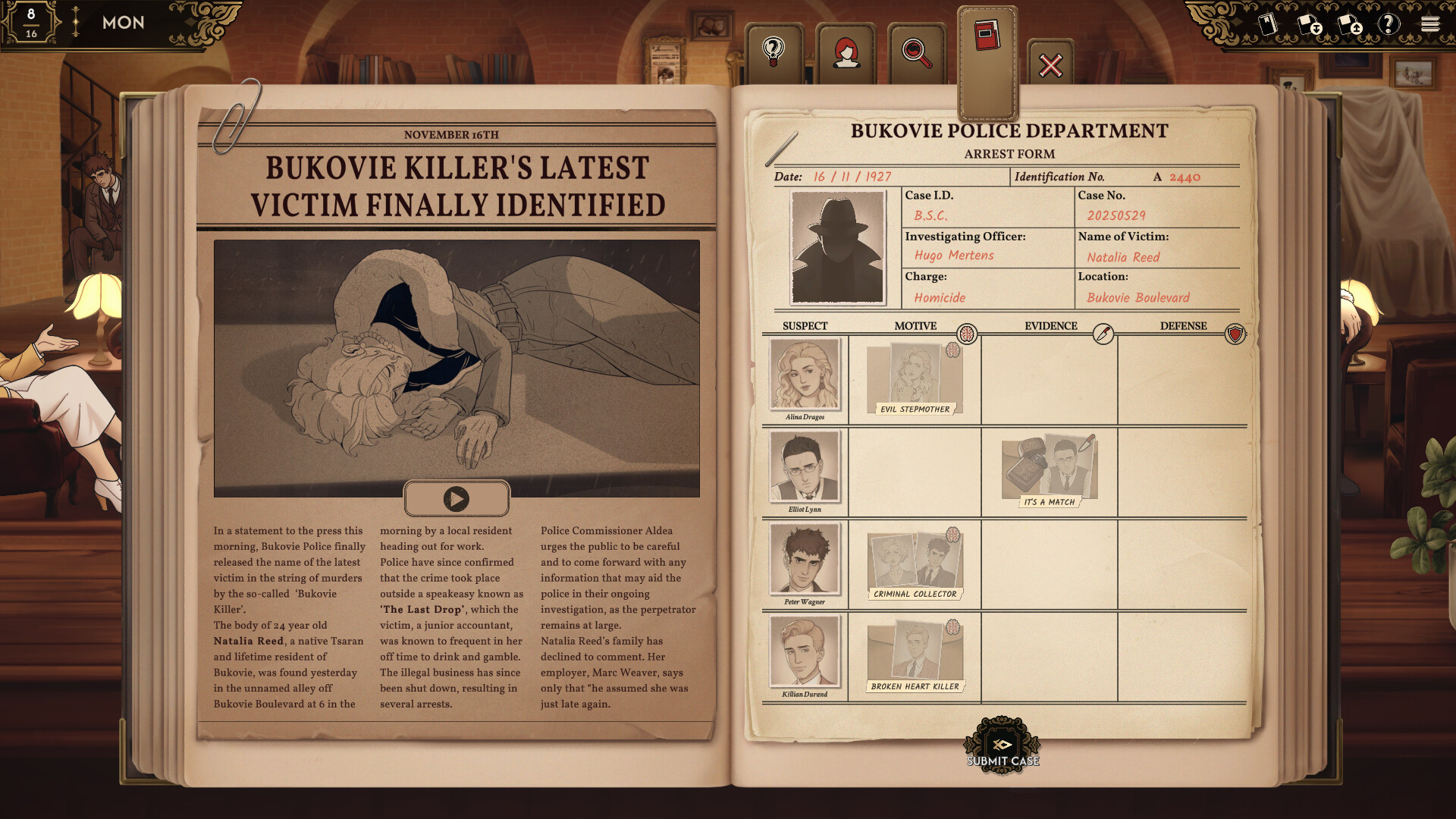
Key historical elements were twisted to serve the narrative. “Some notable puzzle pieces are of course the prohibition itself, as well as the brewing war that is the cause of it within the story,” she revealed. “When we decided to bring the prohibition to Europe, war rationing and rising economic and political tensions being the cause felt like a more natural fit than religious and moral concerns.” This decision had cascading effects on the storytelling. “Once that looming conflict was a piece on the board, it opened the door for a whole host of interesting stories and character beats, further highlighting the differences in our characters’ social and economic backgrounds. Some can afford to stay blissfully unaware of the looming threat, for instance, while others have no such privilege.” The game doesn’t shy away from bending timelines further. “Besides the war, the game includes several other anachronistic elements as well, most visible in the level of technology – as is showcased by the in-game computer terminal named ‘the S.T.A.C.’ that the player uses as part of their investigation.”
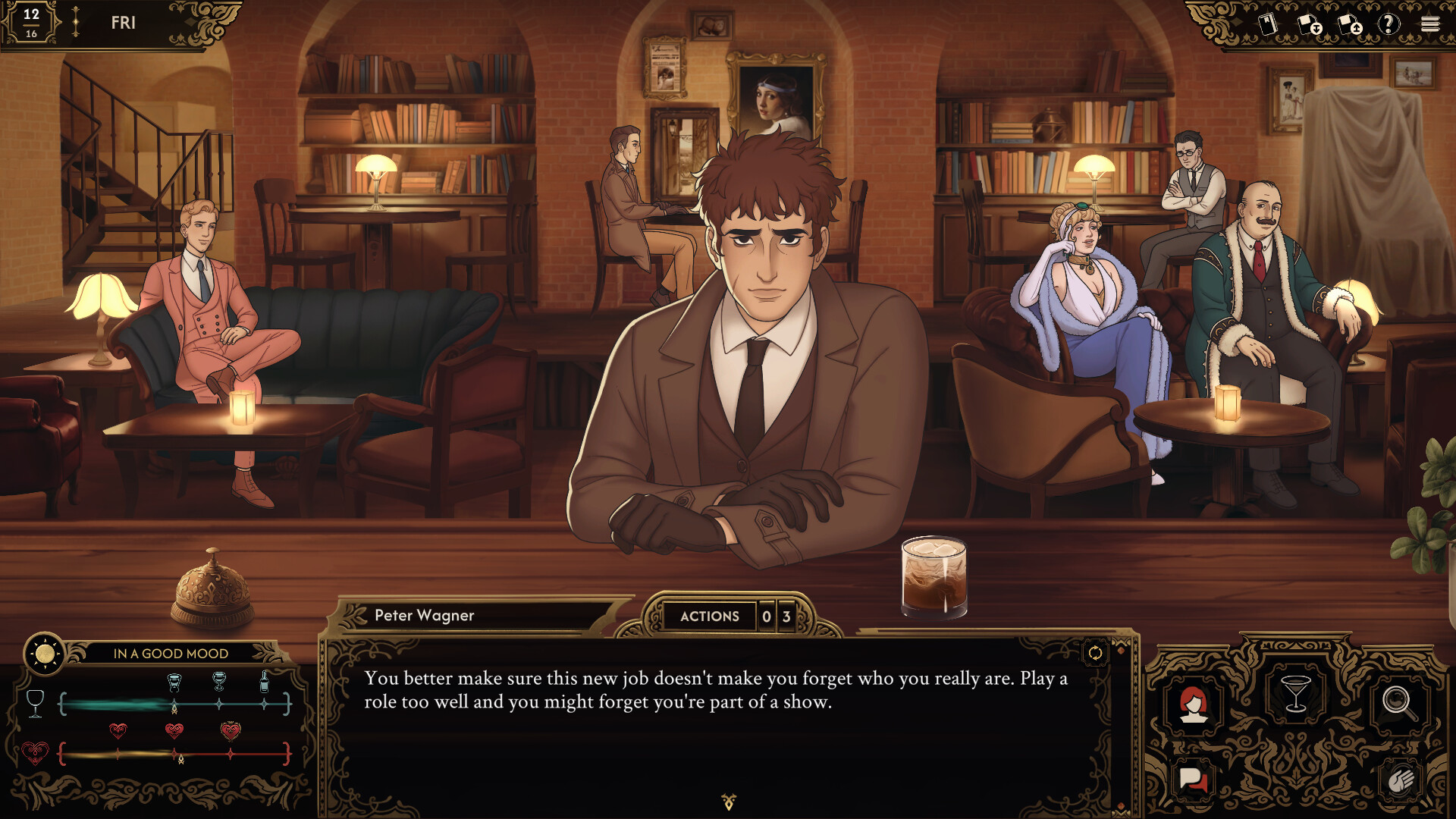
The core gameplay loop involves more than just listening; the cocktail mixing itself is a key mechanic. “We naturally experimented with many different approaches when trying to bring the realities of running a bar to life, but ultimately decided to streamline the mixing process,” Van den Heuvel shared. Players won’t be bogged down in minutiae. “Rather than tossing individual ingredients into the shaker, mixing drinks in Best Served Cold is represented by a minigame that serves as an abstract representation of the act of mixing and of the drink being crafted.” The emphasis remains on interaction. “At its core, Best Served Cold is about the social aspect of bartending more so than it is about the physical one. The drinks you serve are a tool that will help you learn new information and strengthen relationships, but it’s not the only one in your toolbox.” Pacing was also a consideration. “As the player will be mixing hundreds of drinks over the course of the game, a streamlined experience made for better pacing overall.”

The real challenge, and Van den Heuvel’s favorite part of this mechanic, lies in the decision-making. “The real challenge is learning your customers’ tastes and choosing the right drinks at the right time. The goals of your investigation won’t always align with your social goals, and sometimes it may not be obvious which you should prioritize.” She posed several compelling dilemmas: “Do you always give patrons what they ask for, even if what they want may be beyond what they can handle? Do you sometimes deny or even purposefully upset them to better serve your own goals instead? What if lives are on the line? It’s this aspect that is my favourite.”
With a cast of 20 unique characters, ensuring each felt distinct was paramount. “People coming together despite their differences is a crucial part of the story, and from the very start we knew character dynamics would heavily revolve around class divide in particular,” Van den Heuvel stated. Backgrounds are key: “Old money, nouveau riche, working class or outcast… Every character in BSC is shaped by their background and lived experiences. By focusing on that psychological core and how it would affect each character’s outlook, we were able to create a cast where everyone has their own distinct vocabulary, needs, desires and biases.” Player choices carry significant weight. “The outcome of the player’s investigations will determine whether the culprit is caught, whether those falsely accused are vindicated and whether those affected find closure.” However, failure isn’t entirely punitive. “A poorly thought out accusation won’t necessarily lead to innocents behind bars and storylines cut short, but failing to apprehend the killer does have consequences – both big and small… Although not always in the way you’d expect. After all, a killer sticking around at your bar might just be able to provide you with interesting insights in later cases.” The team aimed for an inclusive experience: “That said, even an unsuccessful player will still be able to play the game and reach a satisfactory ending with enough determination. It was important to us not to punish players by locking them out of the core experience like that.”

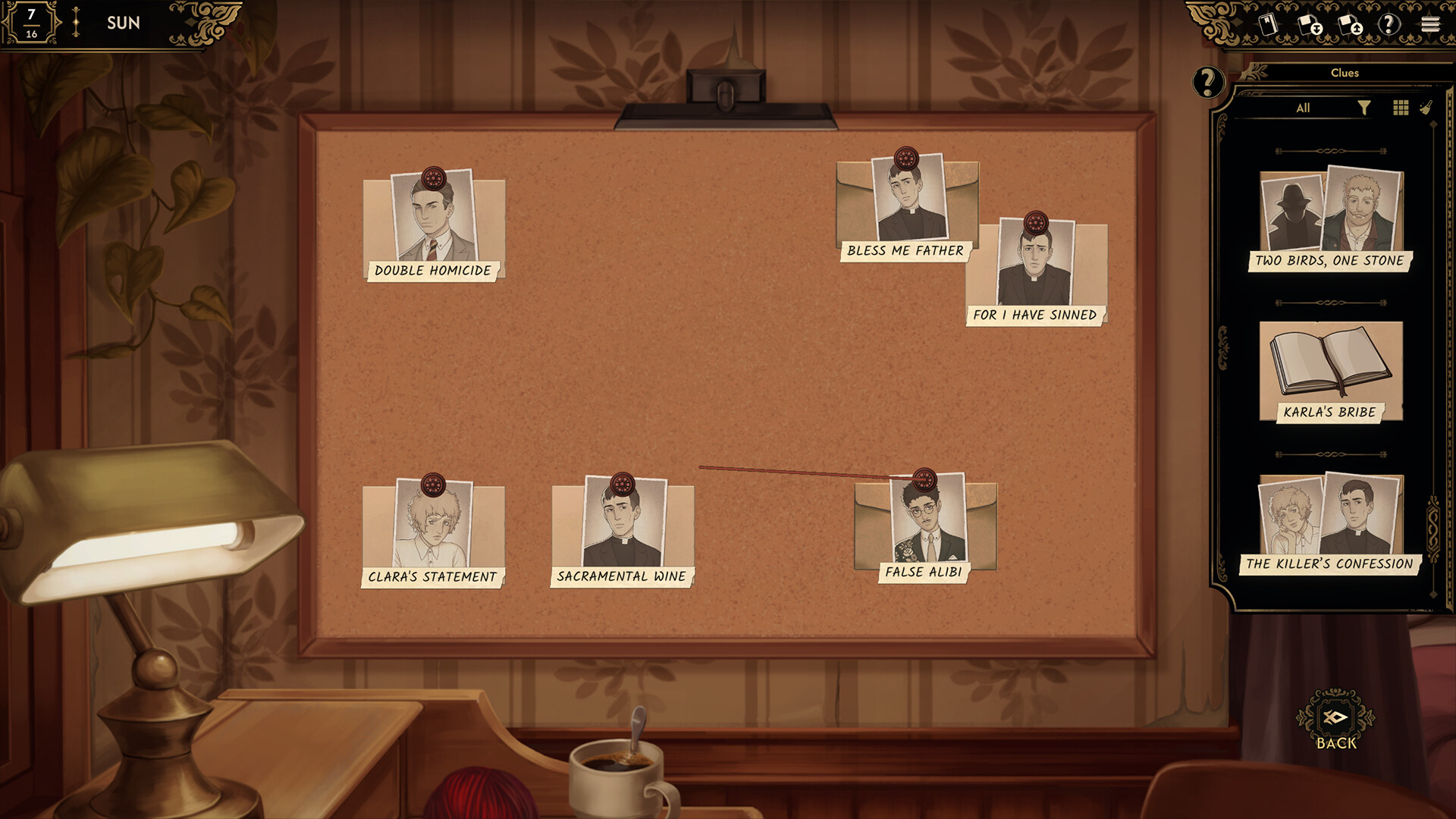
The narrative is designed to reward attentive players. “Best Served Cold revolves heavily around the social element of mystery solving – tapping into the knowledge of your patrons by gaining their trust or lowering their guard and ping-ponging between them to notice lies or inconsistencies in their statements,” Van den Heuvel explained. Understanding interpersonal dynamics is crucial. “An important second layer to this process is learning what the relationships between characters are and who might be a reliable source of information.” Patrons aren’t always forthcoming or truthful. “Characters may want to protect their loved ones with a fictitious alibis or even a false confession, may pretend to be closer than they really are, or may set you on a wild goose chase with lies and slander. Sometimes, they may even try to keep you at bay for your own safety.” Players can actively investigate these connections. “To learn more about who characters really are, the player can ask other patrons about them and even listen in on their conversations.” Ultimately, she concluded, “It’s up to the player to not just to catch a murderer, but to weed out all potential red herrings and ensure they don’t fall victim to their own biases… And, of course, to make sure they themselves don’t become a loose end to be snipped.”
Developing such a narrative-rich game wasn’t without its hurdles. “Coming fresh off of titles like “Warhammer 40,000: Shootas, Blood & Teef” and “Hidden Through Time 2: Discovery”, Best Served Cold was Rogueside’s first shot at a narrative-heavy title, and we immediately set the bar rather high for ourselves when it came to plot and writing,” Van den Heuvel admitted. “Telling the story we wanted to tell within the constraints of word limits, translation / localization and a relatively brief development cycle proved to be a bit of a challenge, though we are very proud of what we were able to achieve in that regard – and it seems players are in agreement!”
When asked about her favorite part of the game, Van den Heuvel pointed to the character arcs. “Personally, my favourite part is seeing the way the characters and their lives can be gradually but irrevocably changed by your influence as both a bartender and a friend.” She elaborated on these transformations: “The hardened criminal coaxed out of his prickly shell enough to show a vulnerable side, the shallow, privileged young man gaining some much needed perspective, the starchy detective learning to place his trust in someone and accept a partnership… The bartender can play a role in all of this and more, improving the lives of the people they touch. Healing from grief, developing a budding relationship, discovering inner strength through community… To me, making a difference like that is what Best Served Cold is all about.”
For aspiring game developers looking to create their own unique visual novels, Van den Heuvel offered encouragement: “I would say just get started! The tools are out there and they’ve never been easier to use. Do not wait for someone’s permission or encouragement. Whether you use Unity, Articy, Ren’py, Ink, Inklewriter, it doesn’t matter. Focus on storytelling, and write what you’re passionate about, and learn the technical skills you need to make YOUR game as and when you need them. And good luck!”
In closing, Van den Heuvel shared a message of gratitude: “We loved working on this game and we hope you love playing it just as much. Thanks to everyone on the team, and most of all thanks to those who bought and played Best Served Cold! Thanks to those who championed the game from the start, and if you left us a Steam review, recommended us to a friend or just read this whole interview, cheers from all of us at Rogueside!”