What happens when a tech founder speaks out about political unrest and faces the consequences? At SaaStanak 2025, a conference mostly focused on software and startups, Nenad Milanović, founder of software company CAKE.com, shared his experience in a session called “Tech, Truth & Resistance”.
The founder talked about the recent protests in Serbia, the cyberattacks that followed his public support, and the challenges independent tech companies face in such environments.
Milanović, a Serbian entrepreneur based in San Francisco, spoke about his decision to publicly support student-led protests in Serbia following a tragic event in Novi Sad in late 2024. He also made a $20,000 donation to the student group organizing the demonstrations.
Shortly after his public statement, Milanović said that CAKE.com—an international software company with multiple SaaS products—was targeted in a distributed denial of service (DDoS) attack. The attack began within hours of his post and affected all of the company’s platforms.
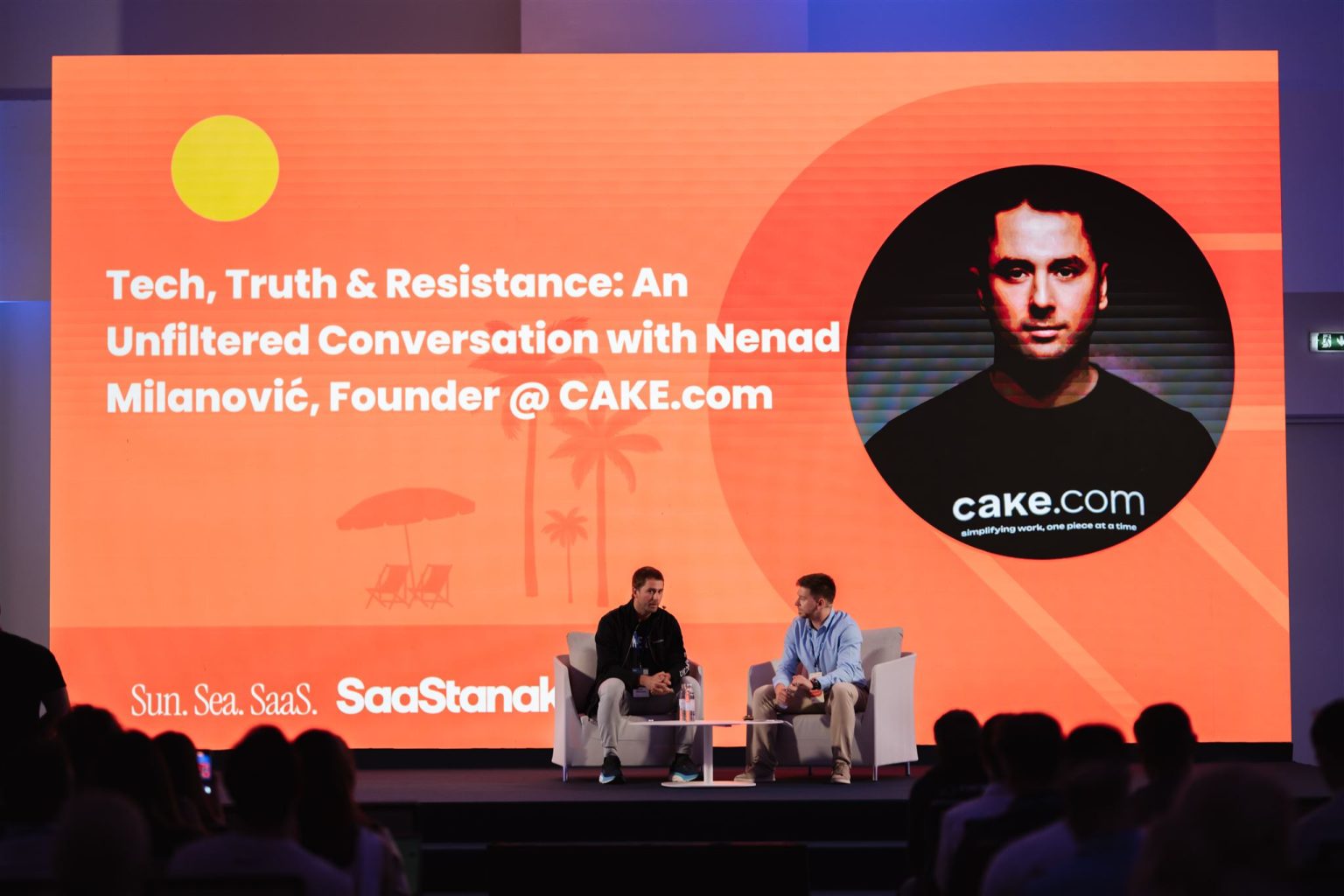
“We have three SaaS products, and they were all under denial of service attack of the scale that we haven’t seen before,” he said, linking the timing directly to his public support for the protests. He noted that logs from previous years had shown no similar incidents, suggesting the event was unusual both in scale and timing.
Milanović also shared that the company had discovered a long-term employee who was allegedly working as a government informant. According to him, there was material evidence that this person had been embedded in CAKE.com for over two years.
The conversation touched on broader concerns about government surveillance and pressure on the tech industry in Serbia. Milanović suggested that the IT sector may be seen as more difficult to control, given its financial independence and global reach.
“Why is the government so scared of this IT sector?” he asked, pointing out that tech companies often operate outside traditional state infrastructure and oversight.
Despite the risks, Milanović expressed cautious optimism about the potential for civic change in Serbia. He highlighted the role of young people in organizing protests and suggested that new political energy could lead to meaningful reform.
When asked about the future of Serbia’s current leadership, his answer was direct: “I think months tops.”
Although political discussions are not typically part of SaaStanak’s programming, the session drew attention to the intersection of entrepreneurship, civic engagement, and digital vulnerability in politically complex environments.