
What if your computer could pay for your pizza? This is one of the main ideas driving Romanian entrepreneur Denis Sandu in scaling his venture, as he shared with me over coffee during How to Web. Leaning back with calm confidence, he explained how he wants to give people the shovel in the AI gold rush – not the big tech companies, but ordinary individuals and small businesses.
ShareAI is a decentralized AI-inference marketplace that turns idle compute – from PCs, GPU rigs, and data centers – into useful work via a single API. Even better, 70% of each job’s revenue goes back to the device owner, letting your unused hardware earn for you.
Denis walked me through his journey, from running a cinematography company in his twenties to teaching himself software development, to realizing the frustration of paying high API costs to large AI providers. What began as an internal tool to help a client manage her online store evolved into a full platform. Today, ShareAI connects over 150 AI models to a decentralized network of providers, reducing costs for clients while turning idle devices into revenue streams.
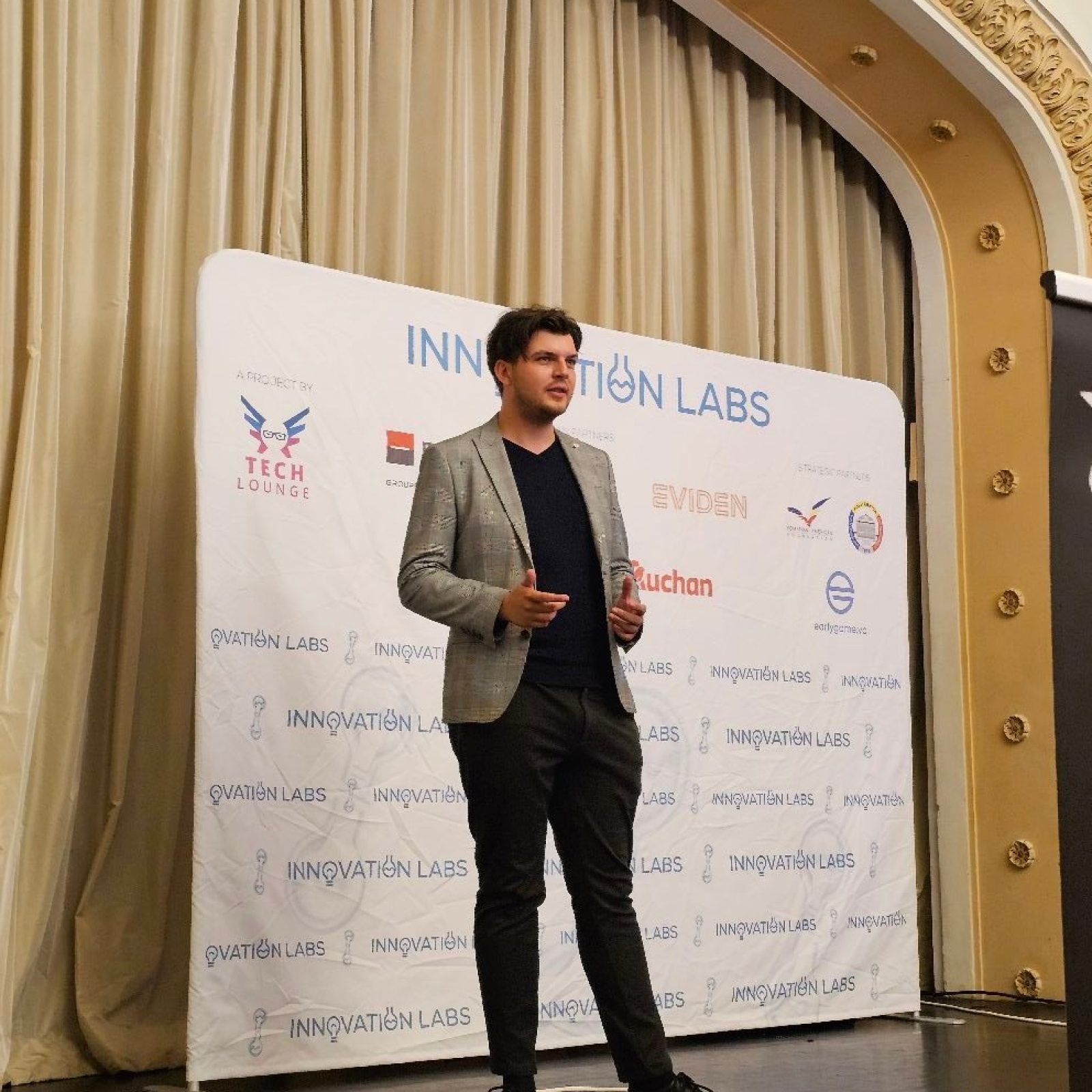
IT Logs: How did you came up with the idea for ShareAI, was there anything tied to your background?
Denis Sandu: I’m not a technical guy and I never went to college. At 20, I founded my first company in cinematography. I worked as both a cinematography director and an actor, even appearing in a few shows. But by 2020, I decided to shut down the company. I had lost interest in that field, and with the pandemic changing everything, the market for film work just wasn’t there anymore.
Around that time, my childhood friend Dragoș, who later became my business partner, told me that his company was hiring developers. I told him, “But I’m not a developer.” He replied, “Yeah, but you’re not stupid either.” So I decided to give it a try. I started learning, and within a month, I got hired.
It was incredible – they chose me over other candidates because I had taught myself everything. The company was growing fast during the pandemic, and they needed someone who could handle things independently. Two years later, Dragoș and I started our own software development agency, taking on projects for clients and learning on the job with our own money. It was a great experience.
While working with different founders, I noticed a common problem – many of them weren’t technical. They wanted online marketplaces or web shops but struggled to manage them afterward. I remember one client, Lucia, a 70-year-old woman from Timișoara, who paid me to build her an online store so she could sell products during the pandemic. The website turned out great, but she had trouble managing it.
That’s when I started building a tool called HeyDo. It worked like a chat assistant – she could type or speak commands like, “Hey ChatGPT, can you change the price of this photo?” or “Please upload a new product image.” She loved it, but I was screaming behind the scenes because the API costs were skyrocketing.
What frustrated me even more was seeing all the money going to OpenAI, Anthropic, and other big players. Meanwhile, I knew my own GPU – and those of my friends who had crypto rigs – were powerful enough to handle similar tasks. So I thought, why not build something local, something that doesn’t rely entirely on external APIs?
That’s how the idea behind ShareAI was born. Initially, it was just an internal module for HeyDo, but it worked so well that it eventually grew into what you’re seeing now in the semifinals. It all started as a fix for my own frustration.
IT Logs: So basically, you recognized a need for this based on an issue you faced yourself?
DS: Exactly. I suddenly realized – wait a second, this isn’t just a feature, it’s a product! When I talked to people about the module I built, everyone kept saying, “Oh, like Airbnb.” And then it hit me – yes, it’s like Airbnb, but for idle compute power.
So, in December, I decided to go all in. I quit my day job at the software company, stopped working on HeyDo development, and began focusing entirely on ShareAI. Since December last year, it’s been my full-time commitment.
A few months later, we now have a decentralized infrastructure with several data centers and compute providers already on board. Our first product isn’t just another decentralized data center platform that lets you rent GPU power. Instead, we’re building dedicated tools for each sector, all based on this decentralized foundation.
The first one is ShareAI, a marketplace that gives users access to more than 150 AI models through a single endpoint. You simply pay per million tokens used. Thanks to our network of independent providers – people and companies with unused computing resources – we can reduce costs by up to 50%.
That’s our story and our core value proposition: giving everyone the ability to put their idle computing power to work. Think about it – your computer sits unused most of the time, but it could be earning for you. You could literally fund your next vacation just by letting your machine contribute to the network.
That’s what ShareAI is all about – using what you already have to create value while you sit back and enjoy your coffee.
IT Logs: So basically, your focus is more on the B2C side?
DS: In terms of customers, yes – but the ones who actually pay us are companies. Our main customers are builders, like the ones you see around at events like this – developers, startups, and organizations that use AI models for their products.
We have two types of providers in our network:
1. Companies – such as data centers or cloud computing providers.
2. Individuals – community members like you or me, who can enroll their own computers when they’re idle.
This setup gives our customers flexibility. They can choose exactly how their compute resources are routed. For example, one client might say, “I want my tasks to go only to certified data centers in the U.S.” Another might prefer “Send it to the community network – it’s cheaper.”
Some companies even choose to share part of their workload with the community because it’s both cost-effective and gives back. Imagine you’re running a translation service – you don’t care which GPU runs the model, as long as it’s fast and affordable. By routing it to community providers, you save more, while individuals like Denis or Marian earn a small profit. So, everyone wins – the customer, the providers, and us.
That’s the beauty of a decentralized network – it balances cost, performance, and opportunity.
Now, about our structure: think of it like OpenAI. Their foundation is an AI lab, and their first product was the DaVinci API, followed by ChatGPT, and now Sora. We’re building something similar – our foundation is a decentralized compute network, and our first product on top of it is ShareAI.
But this is just the beginning. On top of this infrastructure, we can build other markets – for example, platforms for model training, data sharing, or AI research. There are countless possibilities. Right now, we’re focusing on this first product and scaling it properly.
Our providers, in a sense, are like our investors. They don’t invest money, they invest computing power. When their machines aren’t in use, they lend that power to the network and earn from it. It’s a new kind of micro-investment, where your idle computer becomes a productive asset.
IT Logs: How long have you been developing the project?
DS: We’ve been developing it for about nine months now. On October 24 last year, I presented the idea at our first event, and that’s when we officially started working on it. So in just one month, we’ll mark our first full year.
Our core team started with just two founders – myself and Dragoș – but we quickly realized we needed to expand. Once we began developing the technical parts, it became clear that operating in Europe comes with a lot of regulation. We needed legal expertise, so we brought in a new co-founder – a lawyer with his own law firm – who helped us navigate the complex European legal landscape.
It’s not as simple as just building technology. For example, let’s say a user in Romania wants to run a request, but the compute route goes through France. We have to verify whether that’s legally allowed. If Romania doesn’t permit that kind of data exchange, we need to reroute to another country that does.
Europe’s legal framework is strict, especially with GDPR, and cross-border data handling between Europe and the U.S. adds another layer of complexity. That’s why we take compliance seriously. We’re not just building a startup, we’re building a company, with solid foundations, proper procedures, and long-term goals.
IT Logs: Are you currently looking to raise investment, or what kind of support are you focused on right now?
DS: At this stage, our top priority isn’t investors – it’s clients. Events like this are the best place to find them. But before we could bring in clients, we had to ensure we had a reliable network. That meant securing large enough providers first.
We’ve partnered with a data center that’s helping us with a proof of concept (POC), and now that we can properly route traffic, we’re offering free credits, funded from our own pocket, to attract early users. We’re growing, but intentionally not too fast. This kind of business has to scale carefully, because we need to balance supply and demand between compute availability and client usage.
Think about it this way – one of our customers could be a big startup that uses our infrastructure for all their clients. If they have 10,000 users relying on our models, that’s a huge responsibility. We can’t afford downtime or instability, so we’re taking a steady, sustainable approach.
The data center I mentioned isn’t a formal partner yet – it’s a POC collaboration. We also operate some of our own small-scale data centers from our previous agency work, which guarantees that certain models stay up and running no matter what. These early stages are challenging, but as the network grows, things will stabilize – and that’s when we’ll really be able to scale.
IT Logs: What’s your long-term vision for the company?
DS: To become an alternative to the big players – a European alternative. And I say European because this continent has always worked through collaboration. I believe in collaboration, and I believe in sustainability. I don’t believe in building more and more data centers.
In my speech, you’ll see what I mean. IBM once said that, on average, only about 16% of a data center’s capacity is actually being used – the rest is over-provisioned, reserved for potential future clients. Imagine that waste. And why? Because the big players want to own everything – all the data, all the profit.
But I see things differently. There’s already so much idle compute out there. Why build more when we can use what we already have? Let’s make the most out of the existing potential instead of throwing it away.
Of course, this is what idle compute is all about – turning unused resources into something valuable. Yet, what we see today is everyone racing to build new data centers and power the AI revolution. Take companies like Microsoft – just days ago they announced another massive project, adding to hundreds of others already underway. It’s a gold rush.
And if you know the story of the original gold rush 250 years ago, you know that the richest people weren’t the miners – they were the ones selling the shovels. That’s what’s happening now. The big companies are selling the “shovels” of the AI era – the infrastructure, the compute, the data.
ShareAI, on the other hand, is making sure that you can sell the shovel too. We’re ensuring that people and small businesses can use what they already have, their idle compute and profit from it. Why buy the tools from the giants when you already have them at home? You just need to use them.
That’s the idea – to democratize compute power, to make it local, sustainable, and collaborative.