
This is a guest post by Joseph Zammit, driving growth for fintech and crypto businesses. By specialising in fintech and blockchain, he brings deep industry expertise to crypto startups and fintech companies, helping them navigate complex regulations and drive growth with tailored marketing strategies.
This article is a part of a series exploring blockchain, fintech, and Web3 innovations shaping the Balkans. Follow along to stay updated on transformative technologies and their real-world impact in our region.
There was a time when saying “crypto” in the same sentence as “law enforcement” would raise eyebrows or worse, alarms. The industry that gave rise to decentralized finance was long considered the playground of hackers, scammers, and darknet operators. But on June 18, 2025, something changed. Something big.
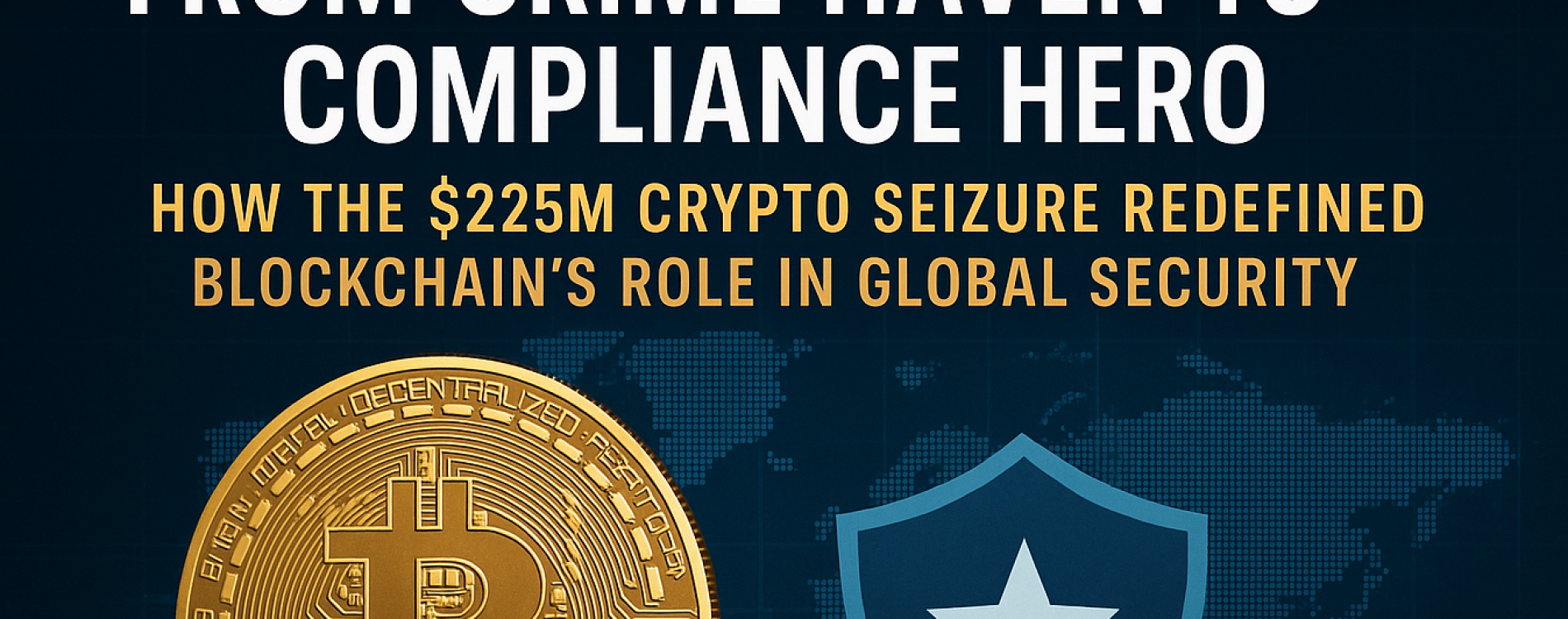
The $225 million crypto seizure the largest in the history of the U.S. Secret Service not only dismantled a massive “pig butchering” scam operation. It redefined the role of blockchain technology in modern crime fighting. It proved that crypto, once seen as the problem, has now become a key part of the solution.
This wasn’t just a victory for victims. It was the moment the crypto industry graduated from rebellious upstart to trusted security ally.
The shift: from transaction tool to trust layer
The operation’s success hinged on unprecedented collaboration between crypto exchanges like Coinbase, blockchain analytics firms, stablecoin issuers like Tether, and U.S. law enforcement. What was once unthinkable crypto companies working side-by-side with authorities was now the gold standard.
This wasn’t passive compliance. Coinbase initiated an “investigative sprint” in late February 2024, tracing illicit USDT across seven wallet groups, with holdings ranging from $3 million to $135 million. Their team analyzed activity, tracked patterns, and proactively flagged criminal behavior. In short, they acted like a financial intelligence unit, not just a business.
This marks a seismic shift. Exchanges are no longer gatekeepers of risk. They’re co-architects of global financial safety.
Blockchain forensics: a new era of transparency
Ironically, the same feature that once made blockchain suspect its anonymity is now proving to be law enforcement’s best friend.
By using LIFO (Last-In-First-Out) tracing techniques, agents unraveled complex laundering chains that crossed multiple blockchains and countries. It’s a stunning demonstration of just how far blockchain forensics has come. Investigators now describe tracking wallets as “easier than tracing bank wires or emails.”
And with tools like TRM Labs and Chainalysis, crypto tracing has gone real-time. Sophisticated AI and machine learning models detect peeling chains, wallet behavior anomalies, and transaction layering long before the human eye can.
What this seizure really exposed was this: crypto is no longer hiding in the shadows. It’s illuminating them.
The villains: pig butchering, human trafficking & industrialized fraud
Let’s be clear this wasn’t just about money. It was about people.
“Pig butchering” scams, which have cost victims $5.5 billion in 2024 alone, are far more insidious than phishing or rug pulls. These scams are operated by criminal syndicates in Southeast Asia who force trafficking victims into cyber-scam labor camps.
These victims yes, the scammers themselves are often lured under false job offers, imprisoned, beaten, and forced to scam others under threat of torture. It’s one of the darkest and most underreported crimes in the digital world.
That’s why the $225M seizure matters. Because it wasn’t just about seizing tokens. It was about choking the cash flow of modern slavery. It was about targeting the infrastructure of human exploitation.
And the crypto industry led the charge.
Stablecoins step up: Tether’s compliance evolution
For years, stablecoin issuers were seen as spectators in the crime-prevention race. But that’s changing fast.
Tether’s decision to proactively freeze $225 million in USDT linked to trafficking rings in late 2023 marked a turning point. Today, Tether claims to have frozen over $2.7 billion connected to illicit activities, cooperating with 255+ agencies across 55 countries.
Is it perfect? No. Criminals still exploit delays in freezing windows AMLBot reports $49.6M slipped out before freezes on the Tron blockchain. But this cat-and-mouse game is narrowing.
The days of passive issuance are over. Stablecoin issuers are now compliance actors with global reach.
Why Southeast Europe should pay attention
For crypto businesses in Southeast Europe (SEE), this is more than just an American story. It’s a template for what’s coming.
With MiCA now fully in force across the EU, and fines of up to €5 million or 5% of turnover for non-compliance, SEE exchanges must adopt the same standards as Coinbase and OKX. That includes real-time transaction monitoring, blockchain analytics, and formal cooperation protocols with law enforcement.
The EU’s Police Cooperation Code is built to support this. What’s needed now is action specifically, cross-border data-sharing capabilities, encrypted law enforcement portals, and trained compliance personnel.
For regulators and exchanges in the Balkans, this moment is an opportunity to leapfrog into global best practice.
This isn’t just about this seizure. It’s about what it represents.
We are witnessing the full maturation of an industry. From a Wild West of anonymous ICOs and unregulated platforms to a compliance-first, security-forward ecosystem, crypto is no longer the antagonist. It’s now the infrastructure provider of modern financial forensics.
Law enforcement agencies depend on crypto data. Blockchain trails are admissible in court. FIUs within exchanges respond in days, not months. And institutional investors are watching, realizing that security and trust are the true currencies of crypto’s future.
The road ahead: a security model built on trust
As crypto’s total market cap surges past $3 trillion, trust is the next trillion-dollar utility.
Mastercard and Fiserv are enabling stablecoin payments at 150 million merchants. ETFs are bringing crypto to pension funds and hedge portfolios. But none of this works without one core element: Security.
The $225M seizure wasn’t just a win for law enforcement. It was a milestone in market maturity a validation of the systems, people, and technologies crypto has built to protect itself and the world.
The message is clear: the industry is ready for its role not just as a financial alternative but as a security partner for the digital age.
This operation wasn’t a one-off. It was a message.
A warning to criminals that blockchain isn’t your hiding place anymore. And a signal to regulators, institutions, and the public that crypto has changed not just in price, but in purpose.
We are no longer on the sidelines of financial security. We are at the frontlines.