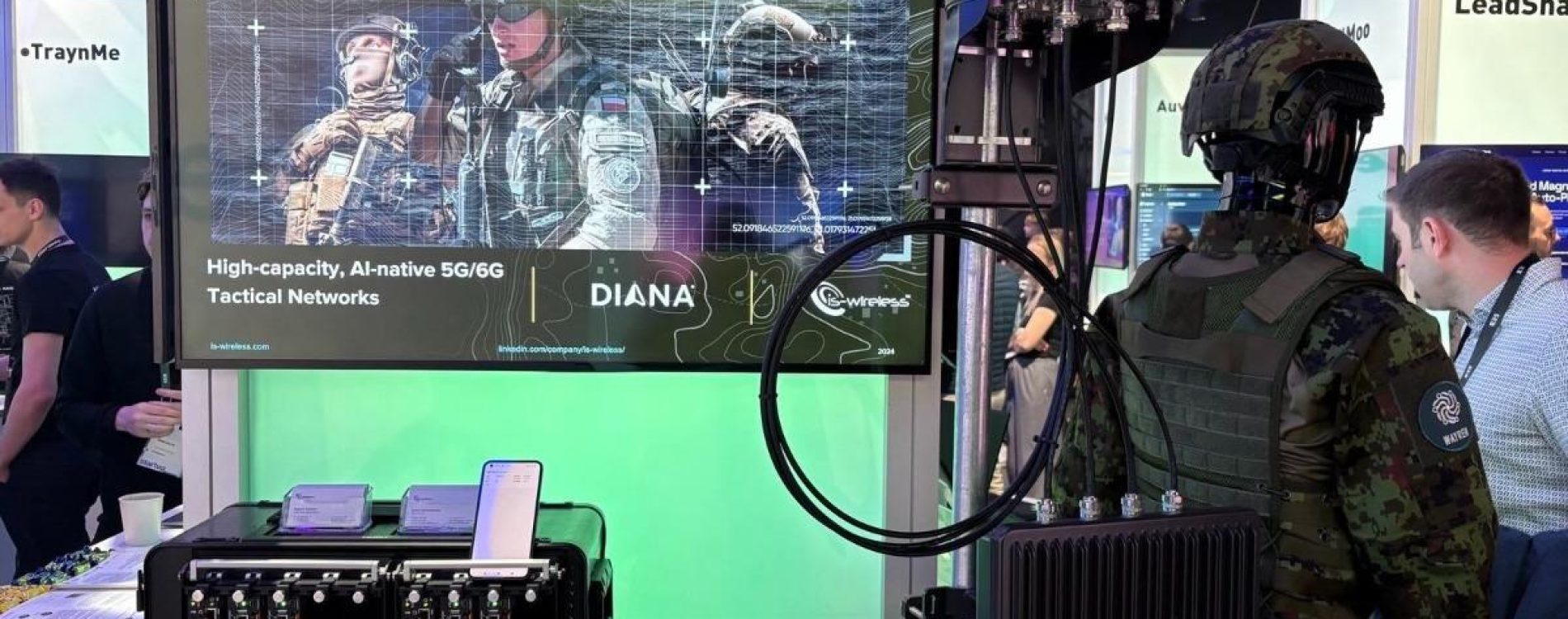

NATO’s Defence Innovation Accelerator for the North Atlantic (DIANA) has selected 150 companies for its 2026 cohort, marking the program’s largest intake since its launch. The focus remains on accelerating dual-use technologies across the Alliance, but this year’s group also highlights a growing number of companies emerging from Central and Eastern Europe.
DIANA, created in 2022, is designed to link commercial deep-tech firms with NATO’s operational needs by providing access to funding, accelerator sites and specialized test centers. Companies selected this year will work across ten challenge areas, including advanced communications, logistics, decision-support tools, unmanned systems, and extreme-environment operations.
According to NATO officials, nearly 3,700 applications were submitted for the 2026 cycle. The 150 chosen firms will begin work within DIANA’s network beginning early next year.
CEE sees expanded representation
While Western European and North American companies still make up the largest share of the cohort, this year brings a clearer presence from Central and Eastern Europe (CEE). Several companies from Romania, Slovenia, Estonia, Slovakia, Czechia and Turkey have been included, reflecting growing technological capabilities in smaller defense markets.
Romania’s INCAS, the country’s aerospace research institute, joined the cohort for its work on energy-efficient composite structures for unmanned aerial systems. Slovenia placed three firms: PEK Automotive, focused on ruggedized last-mile mobility; Robotina, which develops autonomous energy-management systems for remote deployments; and Microbium, known for microbial sensing technologies that can operate in harsh conditions.
Estonia, a regular contributor to NATO’s digital and cyber initiatives, added two firms this year. LSMedical is developing rare-earth-free magnetic solutions for next-generation navigation systems, while C2GRID is building AI-driven battlefield data fusion platforms.
Slovakia’s CulturePulse was selected for its modeling tools that use psychological and behavioral simulations. In Czechia, InovecTech joined with a vision-based surveillance platform designed to serve as a dynamic virtual sensor network.
Growing momentum for smaller defense ecosystems
Officials say the wider geographic mix reflects an effort to ensure that all NATO members, including smaller states on the Alliance’s eastern flank, can participate in long-term capability development. Many of this year’s CEE companies focus on niche but strategically relevant areas: from resilient energy systems to environmental monitoring and data processing.
For selected firms, DIANA provides access to testing infrastructure and potential pathways toward military procurement, a challenge often cited by smaller tech companies entering the defense market.
The 2026 cohort will now enter DIANA’s accelerator system, where companies test and refine their technologies with guidance from NATO experts. The most successful may move toward operational trials or collaborative development with member-state militaries.
While it remains uncertain which companies will ultimately scale or achieve deployment, the increased participation from CEE is a sign that innovation activity in the region continues to expand, shaped in part by shifting security priorities across the continent.